
What Is a Digital Creator? Everything You Need to Know
Do you want to understand what a digital creator is, how they work, and how they earn online?
You are not alone. Every day, more people are moving from just consuming content online to creating it and building income streams from it. From short-form videos and social media posts to blogs, podcasts, and online courses, digital creators are influencing how people learn, shop, and stay entertained.
So, what is a digital creator, and why is this term becoming so popular?
In this guide, you will learn the meaning of a digital creator, how they differ from content creators and influencers, the skills needed to become one, how to start your journey as a digital creator, and the different ways digital creators make money. You will also find answers to common questions.
Digital Creator Meaning
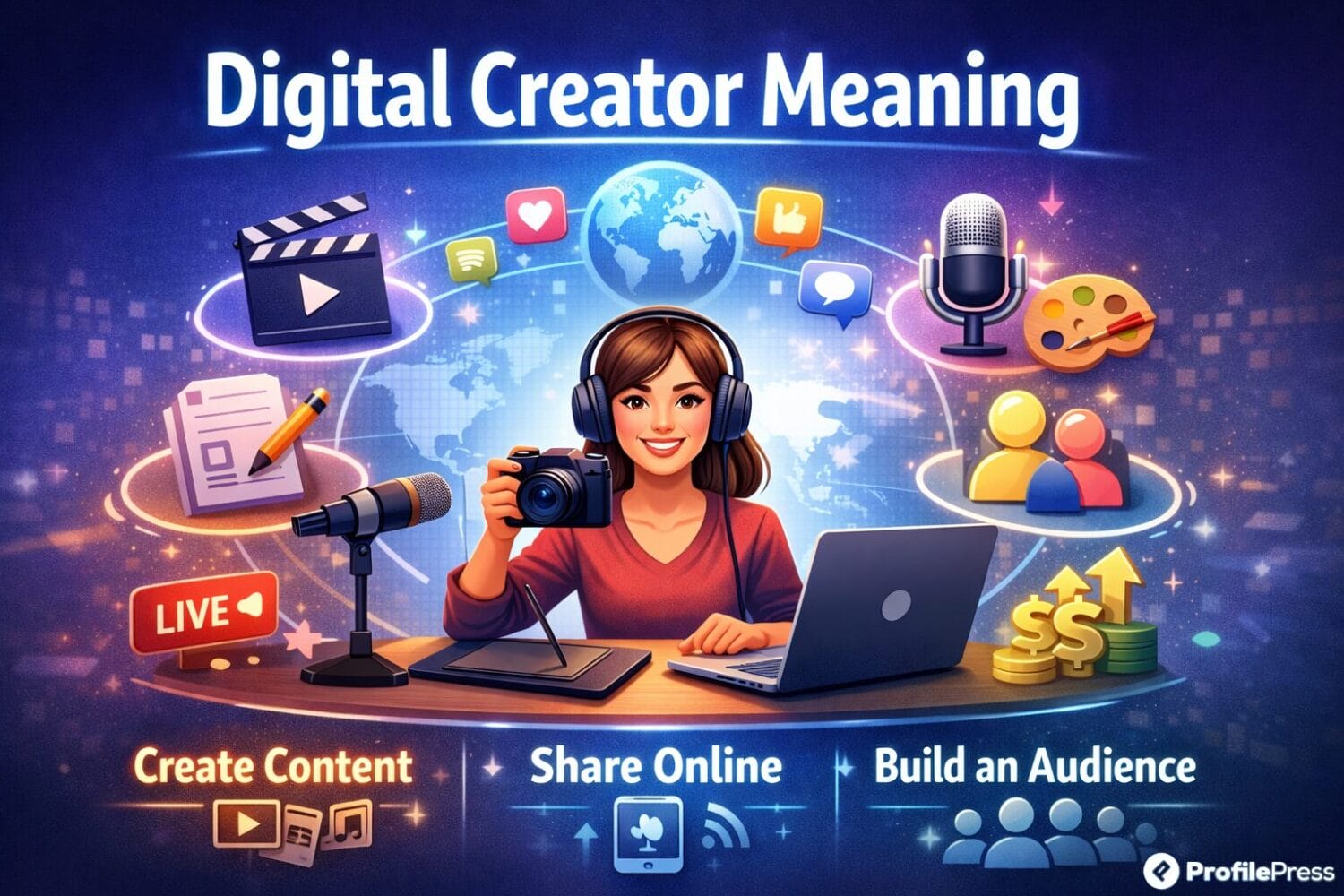
A digital creator refers to any individual who produces original content specifically for digital platforms and online audiences.
This content can take many forms, such as written articles, blog posts, videos, podcasts, photography, graphic design, illustrations, social media posts, newsletters, online courses, and more. What unites all of these formats under the same definition is that they are created, distributed, and consumed primarily in digital space.
So, if you’re still wondering what a digital creator means in a real-world sense, think of it as someone who uses the internet as their primary space to express ideas, build an audience, and often generate income.
Another important part of being a digital creator is consistency. Successful creators don’t just post once in a while; they show up regularly, refine their content over time, and learn what their audience responds to. This is what separates a digital creator from someone who shares random updates online.
Digital Creator vs Content Creator vs Influencer
As you explore what a digital creator is, you will likely come across similar terms like content creator and influencer. They are often used interchangeably, but they do not mean the same thing.
Below is a clear breakdown to help you understand the difference.
Digital Creator
A digital creator is an umbrella term. It refers to anyone who creates and publishes content using digital platforms such as social media, blogs, video platforms, or podcasts.
The focus here is on creating original content with a clear purpose. That could be to educate, entertain, inspire, or solve a problem.
Digital creators can exist in many forms. A YouTuber, blogger, course creator, or even a newsletter writer all fall into this category.
Content Creator
A content creator is very similar to a digital creator, but slightly broader in scope. A digital creator is mostly tied to online platforms, while a content creator can create for both digital and offline use.
For example, someone writing scripts for TV, producing magazine articles, or creating marketing materials is also a content creator.
In everyday use, though, most people use “content creator” to describe those creating online content. The real difference is that “digital creator” emphasizes the platform (digital), while “content creator” emphasizes the act (creating content).
Influencer
An influencer is a bit different. Influencers focus more on impact and audience trust than on content creation alone. Their main strength is their ability to influence their audience’s opinions, decisions, or purchasing behavior.
While influencers create content, their goals often center on visibility, partnerships, and brand promotion. Many influencers work with companies to promote products or services to their followers.
Not every digital creator is an influencer, but every influencer is usually a digital creator.
The Main Difference
The easiest way to understand the difference is this:
- A digital creator focuses on creating valuable digital content
- A content creator focuses on creating content in general (online or offline)
- An influencer focuses on influencing an audience, often through the content they create
While these definitions make the distinction clearer, in reality, the lines between them are often blurred. One person can easily fit into all three categories at the same time. The difference usually comes down to intent and focus.
If your main goal is to produce and share original content online, you are operating as a digital creator. If your focus is on producing content regardless of where it appears, you fall under the category of a content creator. And if your strength lies in building trust and guiding your audience’s decisions, then you are acting as an influencer.
Understanding this helps you decide the direction you want to take. You might start as a digital creator, grow into a content creator across multiple channels, and eventually build enough authority to become an influencer.
Skills Needed to Become a Digital Creator
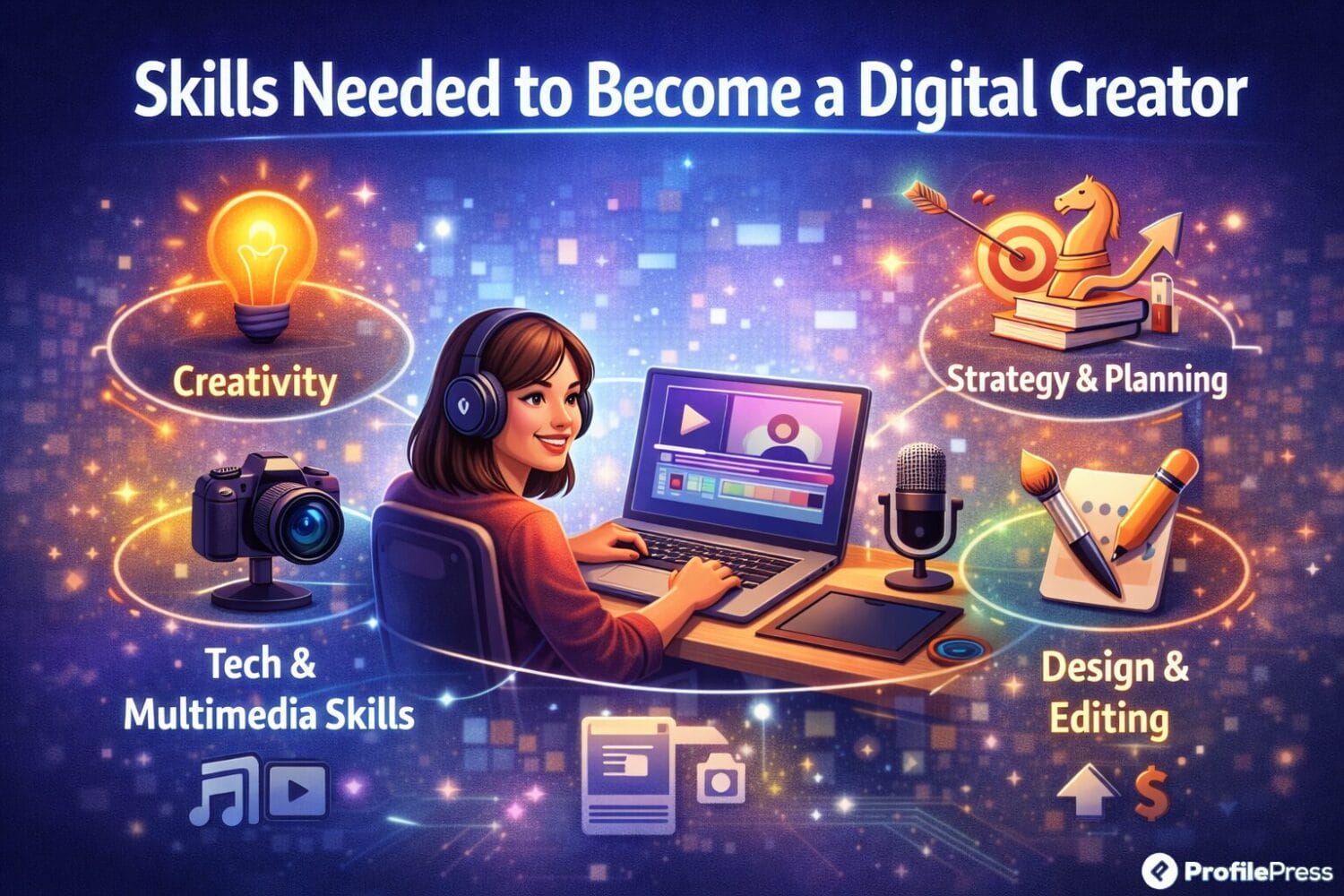
Now that you understand what a digital creator is and how it differs from related roles, the next step is knowing what skills you need to succeed in this space.
These skills include:
- Copywriting: crafting persuasive, engaging written content that captures attention and drives action
- Search Engine Optimization (SEO): understanding how to make your content discoverable on search engines.
- Research Skills: the ability to find reliable information, identify trending topics, and understand your audience’s needs
- Social Media Management: knowing how to schedule posts, engage with followers, and grow an audience across multiple platforms
- Brand Analysis: knowing how to study competitors, identify gaps in the market, and position your personal brand strategically.
- Data Analytics: interpreting performance metrics to understand what content resonates and what needs improvement
- Photography & Visual Storytelling: producing high-quality images that complement your content and strengthen your visual identity
- Graphic Design & Illustration: creating visually compelling thumbnails, social media posts, infographics, and branded visuals
- Content Management Systems (CMS): navigating platforms like WordPress, Webflow, or similar tools to publish and manage content efficiently
- Basic Digital Marketing: understanding how to promote content through email campaigns, paid ads, and social media strategies
- Audience Engagement & Community Building: fostering genuine connections with your followers through comments, live sessions, and interactive content
- Monetization Strategy: understanding how to generate income through sponsorships, digital products, affiliate marketing, and subscriptions
- Time Management & Content Planning: organizing your workflow, maintaining a content calendar, and publishing consistently without burning out
Note that the skills most relevant to you will depend on your niche, platform of choice, and where you are in your creator journey. You don’t need all of these from day one. Focus on the ones that align with your goals and expand from there.
How To Become A Digital Creator
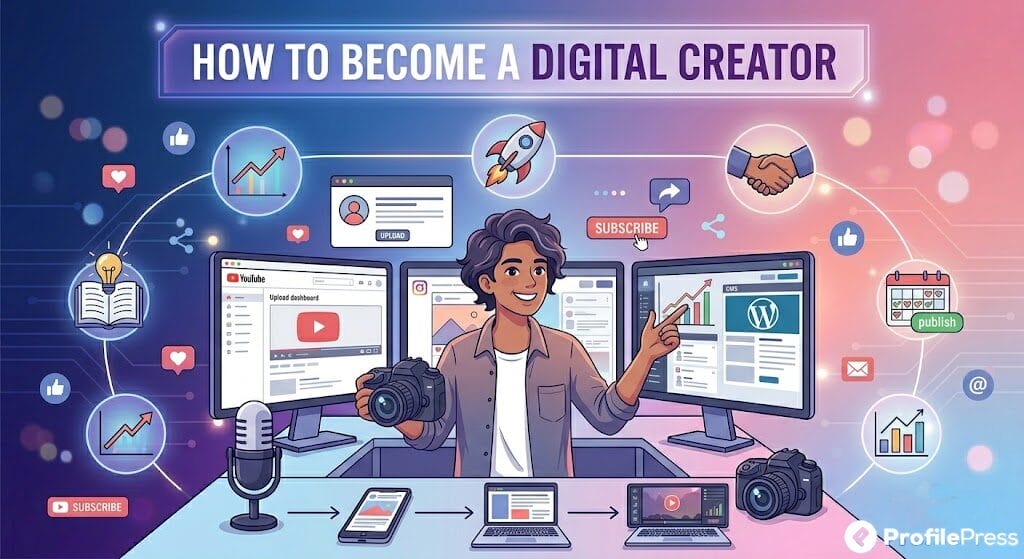
Becoming a digital creator is one of the most accessible career paths available today. Unlike traditional careers, there is no fixed degree requirement, no single entry point, and no one-size-fits-all roadmap.
What matters most is your willingness to start, your commitment to consistency, and your ability to keep learning.
If you have been wondering how to go from consuming content online to actually creating it, below are 9 excellent steps to help you get started.
1. Identify Your Niche
Every successful digital creator starts with a clear focus. Your niche is the specific topic, interest, or area of expertise around which you will build your content. It could be personal finance, fitness, travel, fashion, technology, cooking, mental health, parenting, or virtually anything else you are knowledgeable or passionate about.
Choosing a niche is important because it helps you attract the right audience, build authority, and differentiate yourself in an increasingly crowded digital space.
The sweet spot is where your passion, skills, and audience demand intersect. To find that intersection, ask yourself: What do I genuinely enjoy talking about? What problems can I help people solve? What topics could I create content around consistently without running out of ideas?
You do not need to niche down to an extremely narrow topic right away, but having a general direction will give your content purpose and make it easier for people to know what to expect from you.
2. Choose Your Content Format and Platform
Once you know what you want to create content about, the next step is deciding how you want to deliver it and where.
Digital content comes in many formats: written articles and blog posts, short or long-form videos, podcasts, photography, infographics, newsletters, or a combination of several.
Your choice of format should be guided by two things: what you are naturally comfortable with and where your target audience spends their time.
If you are articulate on camera, YouTube or TikTok might be a good fit. If you prefer writing, a blog or a newsletter platform like Substack could be your starting point. If you have a good eye for visuals, Instagram or Pinterest may be a good fit for you.
It is generally advisable to start with one or two platforms rather than trying to be everywhere at once. Mastering a single platform first gives you the chance to understand its algorithm, build a loyal audience, and refine your content style before expanding your reach.
3. Define Your Target Audience
Great content is not created in a vacuum; it is created for a specific group of people. Defining your target audience means understanding who you are speaking to, what they care about, what challenges they face, and what kind of content they find valuable or entertaining.
Spend time researching your potential audience. Look at the comment sections of creators in your niche, explore relevant online communities and forums, and pay attention to the questions people ask repeatedly.
The more clearly you understand your audience, the better equipped you will be to create content that genuinely resonates with them and keeps them coming back.
4. Invest in the Right Tools and Equipment
You do not need expensive equipment to start creating content, but having the right basic tools will significantly improve the quality of your work.
Depending on your chosen format, this might include a decent smartphone or camera, a microphone for clear audio, basic lighting equipment, and editing software.
On the software side, tools like Canva are great for graphic design, CapCut or Adobe Premiere Pro work well for video editing, and platforms like Audacity or GarageBand are solid options for audio editing. As you grow and start generating income from your content, you can gradually invest in more professional equipment and tools.
5. Develop a Content Strategy
Creating content without a strategy is like setting off on a road trip without a map. A content strategy helps you plan what to create, when to publish it, and how to ensure it serves both your audience and your goals.
Start by building a content calendar — a simple schedule that outlines your publishing frequency and the topics you plan to cover. Consistency is one of the most important factors in growing an audience, so commit to a posting schedule you can realistically maintain. Whether that is once a week or three times a week, what matters most is showing up regularly.
Your strategy should also factor in content pillars, the main topics you will keep discussing. Instead of posting about random things, you pick three or four “home bases” for your ideas.
This keeps your work organized, so your followers always know what to expect from you. When people understand exactly what kind of help or entertainment you provide, they are much more likely to keep coming back.
6. Create, Publish, and Iterate
Start creating. Many aspiring creators get stuck in a cycle of overplanning and never actually publish anything. Do not wait until everything feels perfect; your first pieces of content will rarely be your best, and that is completely normal.
Publish your content, observe how your audience responds, and pay close attention to your analytics. Which posts get the most engagement? Which videos have the highest watch time? Which topics generate the most comments or shares? Use this data to refine your approach over time.
The most successful digital creators are those who treat content creation as a continuous learning process. They experiment with different formats, topics, and styles, and they are not afraid to evolve based on feedback and results.
7. Build and Engage Your Community
As you grow as a digital creator, you will naturally start gaining an audience. These are not just numbers on a screen. They are real people who choose to spend their time engaging with your content. That is why it is important to value them and build a genuine connection.
One of the simplest ways to do this is by interacting with them regularly. Reply to comments, respond to messages, and acknowledge their support. These small actions make people feel seen and appreciated.
If you want to take things further, think about creating a dedicated space where your audience can connect with you more closely. This could be a private group or community on a platform designed for building communities. In that space, your followers can interact not just with you, but also with each other. You can host live sessions, share exclusive updates, and even give early access to new content.
Building a community creates a sense of belonging. Your audience starts to feel like they are part of something bigger, not just passive viewers. Over time, this leads to better engagement, deeper loyalty, and more support for your content.
8. Learn the Basics of SEO and Content Distribution
Creating great content is only half the battle; the other half is making sure people can actually find it. This is where an understanding of Search Engine Optimization (SEO) becomes invaluable.
SEO involves using relevant keywords, writing clear headlines, adding proper tags, and structuring your content well. When done correctly, it increases your chances of ranking higher in search results and getting more organic traffic.
For WordPress users, CrawlWP can make this process easier. It helps your content get indexed faster by search engines like Google, Bing, and Yandex, instantly notifying them when you publish or update content.
Beyond SEO, think about how you will distribute your content across channels. Sharing your content on social media, collaborating with other creators, repurposing content across different formats, and building an email list are all powerful ways to extend your reach beyond your primary platform.
When you combine SEO with great distribution, your content becomes easier to discover, helping you grow faster as a digital creator.
9. Stay Consistent and Keep Growing
The most important advice for any aspiring digital creator is: do not give up too soon. The path to becoming a successful digital creator is rarely easy. There will be periods of slow growth, creative blocks, and moments of self-doubt. What separates those who make it from those who quit is consistency and resilience.
Invest in your growth by staying curious, following industry trends, taking online courses, attending creator events, and connecting with other creators in your space. The digital landscape is always evolving, and the creators who thrive are those who are willing to adapt, improve, and keep showing up even when results feel slow.
How Digital Creators Make Money
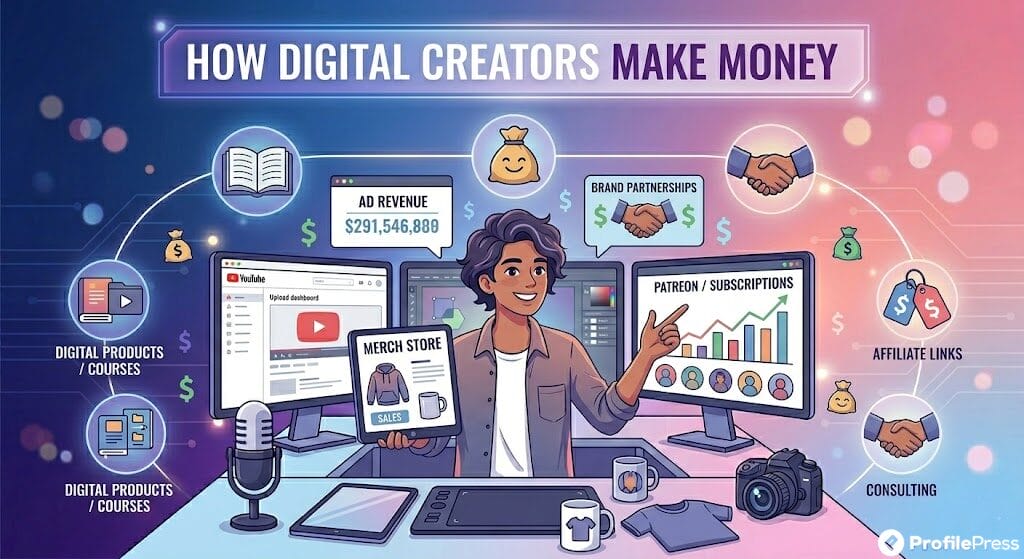
One of the most common questions people ask when trying to understand “what is a digital creator” is how they actually earn income from their work.
The answer is that digital creators make money in several different ways, and most successful creators do not rely on just one source. Instead, they build multiple income streams around their content, audience, and influence.
Here is a breakdown of the most effective and widely used ways digital creators make money:
- Brand Partnerships and Sponsorships: This is one of the most popular ways digital creators make money. Brands pay creators to promote their products or services in videos, posts, or stories.
- Ad Revenue: Many platforms pay creators based on the number of views or ad impressions generated by their content. YouTube is the most common example, where ads are shown before or during videos. As your content gets more views, your ad earnings increase.
- Affiliate Marketing: In affiliate marketing, creators recommend products or services and earn a commission when someone purchases through their unique link.
- Selling Digital Products: Many digital creators also earn by creating and selling their own products, such as ebooks, online courses, templates, or guides. These products are usually based on their personal skills, knowledge, or experience in a specific area.
- Paid Memberships and Subscriptions: Some creators offer exclusive content to paying members. This could include private videos, tutorials, community access, or early content releases.
- Services and Freelance Work: Digital creators often turn their skills into services such as coaching, consulting, design, writing, or strategy sessions. As their authority grows in a niche, people are willing to pay for their expertise and direct guidance.
- Donations and Fan Support: Some audiences choose to support creators directly through donations or tipping platforms. This usually happens when followers deeply value the content and want to contribute without expecting anything in return.
- Licensing and Content Usage: In some cases, creators earn revenue by licensing their content to brands or media platforms. This could include videos, photos, or music being licensed for commercial use.
FAQs
Q1. What does digital creator mean in simple terms?
A digital creator is someone who uses the internet to share content and ideas with others. It could be a person making short videos, writing blog posts, or sharing educational content on social media.
Q2. Can anyone become a digital creator?
Yes, anyone can become a digital creator as long as they have access to the internet and something valuable to share. There is no strict requirement, and many successful creators started with just a phone and a simple idea.
Q3. What platforms do digital creators use?
Digital creators operate across a wide range of platforms depending on their content format and target audience.
Some of the most popular platforms include YouTube for long-form video content, TikTok and Instagram Reels for short-form video, Instagram and Pinterest for visual and photo-based content, Spotify and Apple Podcasts for audio content, WordPress and Medium for written content and blogging, Substack for newsletters, and Twitch for live streaming.
Q4. Can digital creation be a full-time career?
Absolutely. Thousands of people around the world have turned digital creation into a full-time career, and the number continues to grow as the creator economy expands. According to various industry reports, the global creator economy is now worth hundreds of billions of dollars, with no signs of slowing down.
That said, transitioning to full-time creator status requires careful planning, financial discipline, and a diversified income strategy. Most creators start part-time while maintaining another source of income, and make the leap to full-time once their creator income becomes stable and predictable enough to support their lifestyle.
Q5. What type of content should I create as a digital creator?
The type of content you create should be guided by three things: your passion and expertise, your target audience’s needs and interests, and the platform you have chosen to focus on.
Q6. Is it too late to become a digital creator?
No, it is not too late. While it is true that many platforms are more competitive today than they were five or ten years ago, new creators break through every single day. Audiences are always hungry for fresh perspectives, unique voices, and content that speaks directly to their experiences.
Q7. Can I be a digital creator without showing my face?
Yes, many creators succeed without showing their face. You can create content using voiceovers, animations, screen recordings, or written content while still building a great audience.
Conclusion
Whether you stumbled across this guide asking what a digital creator is, or you arrived already knowing you wanted to build a presence in the digital space, one thing is clear: you now have everything you need to take that first confident step forward.
If there is one final thought to leave you with, it is this: every digital creator you admire today, whether a YouTuber with millions of subscribers, a blogger with a loyal readership, or a podcaster with a thriving community, started exactly where you are right now. They had questions, doubts, and imperfect first attempts. What made the difference was not talent alone, but the decision to start and the discipline to keep going.
As you begin your journey, ProfilePress can help you turn your content into a real online business. From creating membership sites and selling digital products to managing subscriptions and user communities, it gives you everything you need to monetize your digital presence effectively.
The journey will not always be smooth. There will be moments of doubt, slow growth, and trial and error. But every piece of content you create moves you one step closer to building something meaningful. With the right mindset, a clear focus, and a willingness to learn, you can turn your creativity into impact and, over time, into opportunity.
Now that you understand what a digital creator is, what it takes, and what is possible, the only thing left to do is begin.