
8 Best Kickstarter Alternatives in 2026
Are you looking for the best Kickstarter alternatives that offer more control, greater freedom, and new ways to fund your ideas?
Kickstarter has helped many creators bring projects to life, but it doesn’t always work for everyone. The all-or-nothing funding model, platform fees, and limited control over your audience can make it difficult to build something that lasts beyond a single campaign.
That’s why more people are exploring other options.
Several powerful Kickstarter alternatives are available. Some let you keep whatever you raise, while others focus on recurring support through memberships. There’s also a growing trend of building your own funding system, giving you full control over your audience and income.
In this article, you’ll learn what crowdfunding is, explore the 8 best Kickstarter alternatives, and find out how to choose the right one for your project.
Crowdfunding Explained
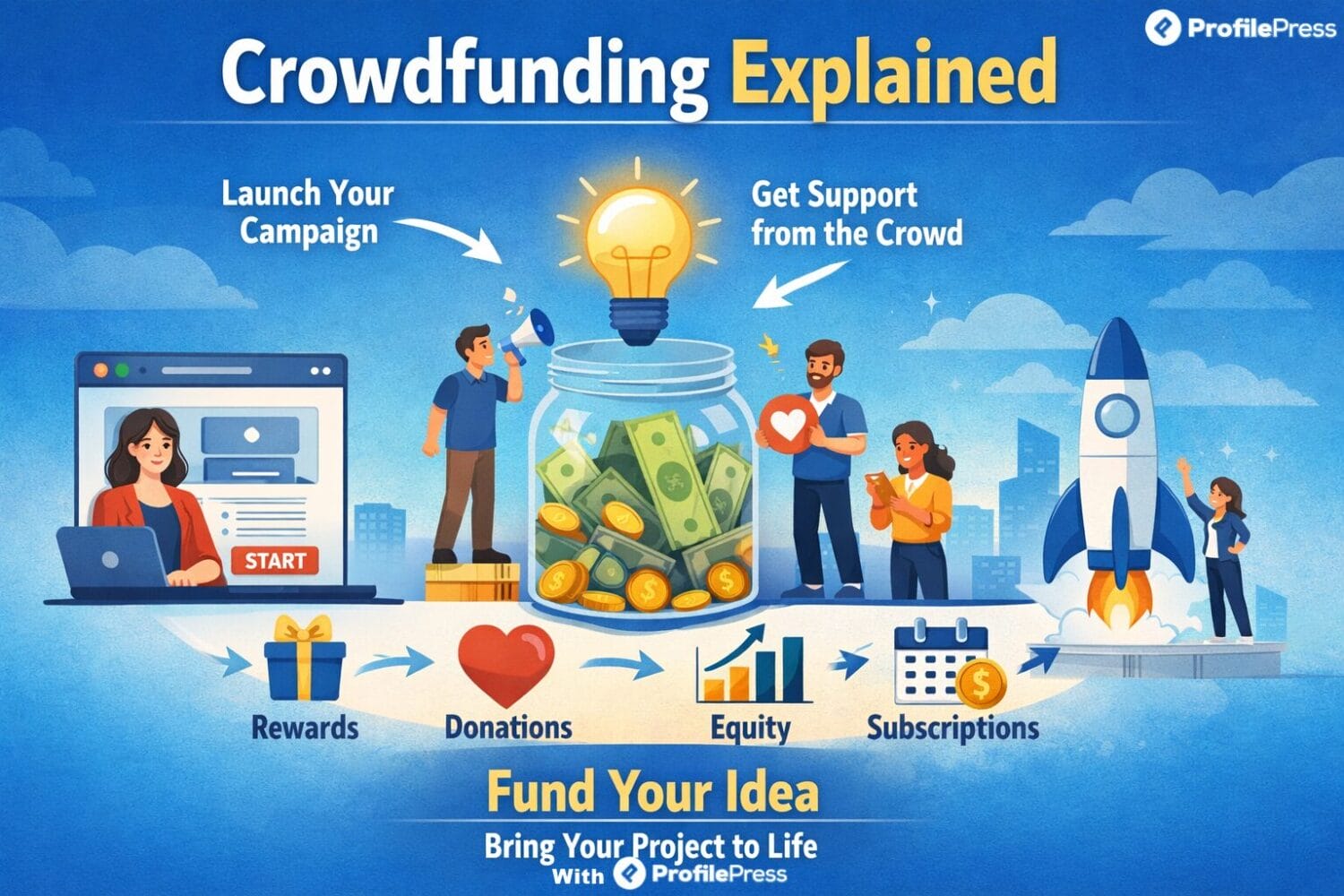
Before exploring the best Kickstarter alternatives, it helps to understand what crowdfunding really means and why it has become such a popular way to raise money.
Crowdfunding is the process of collecting small amounts of money from a large number of people, usually online, to fund a project, idea, or business. Instead of relying on a bank loan or a single investor, you invite the public to support what you’re building.
Platforms like Kickstarter made this model widely known, giving creators a place to present their ideas and attract backers from around the world.
How Crowdfunding Works
At a basic level, crowdfunding follows a simple process.
You create a campaign that explains your idea, what you plan to achieve, and how the funds will be used. Most campaigns include a clear goal, a deadline, and sometimes rewards for supporters.
People who believe in your idea can then contribute money to help bring it to life.
Depending on the platform or method you choose, you may receive the funds only if you reach your goal, or you may be able to keep whatever you raise.
Types of Crowdfunding
Not all crowdfunding works the same way. The model you choose will depend on what you’re trying to achieve, whether it’s raising money for a product, building a loyal audience, or attracting investors.
Let’s break down the main types of crowdfunding so you can see which one fits your goals.
- Reward-Based Crowdfunding: This is the most common type and the one most people think of first. With reward-based crowdfunding, people support your project in exchange for a reward. This could be early access to your product, exclusive items, or special perks.
- Donation-Based Crowdfunding: In this model, people give money without expecting anything in return. It’s often used for personal causes, medical expenses, or charity projects where supporters are motivated by goodwill rather than rewards.
- Equity Crowdfunding: Equity crowdfunding is more business-focused. Instead of offering rewards, you offer a share in your company. People who contribute become investors and may earn returns if your business grows.
- Subscription-Based Crowdfunding: This model focuses on ongoing support instead of one-time funding. Supporters pay regularly, usually monthly, in exchange for access to exclusive content, updates, or community perks.
- Debt Crowdfunding (Peer-to-Peer Lending): This type of crowdfunding works like a loan. Instead of giving money as a donation or investment, people lend money with the expectation that it will be repaid with interest.
Each crowdfunding type serves a different purpose.
If you want to launch a product, reward-based crowdfunding might be the best option. If you’re raising money for a cause, donation-based works well. And if you’re building a long-term business, subscription-based or equity crowdfunding may be a better fit.
Understanding these options will make it much easier to choose the right platform.
Next, let’s explore the best Kickstarter alternatives so you can find the one that matches your goals.
1. Indiegogo
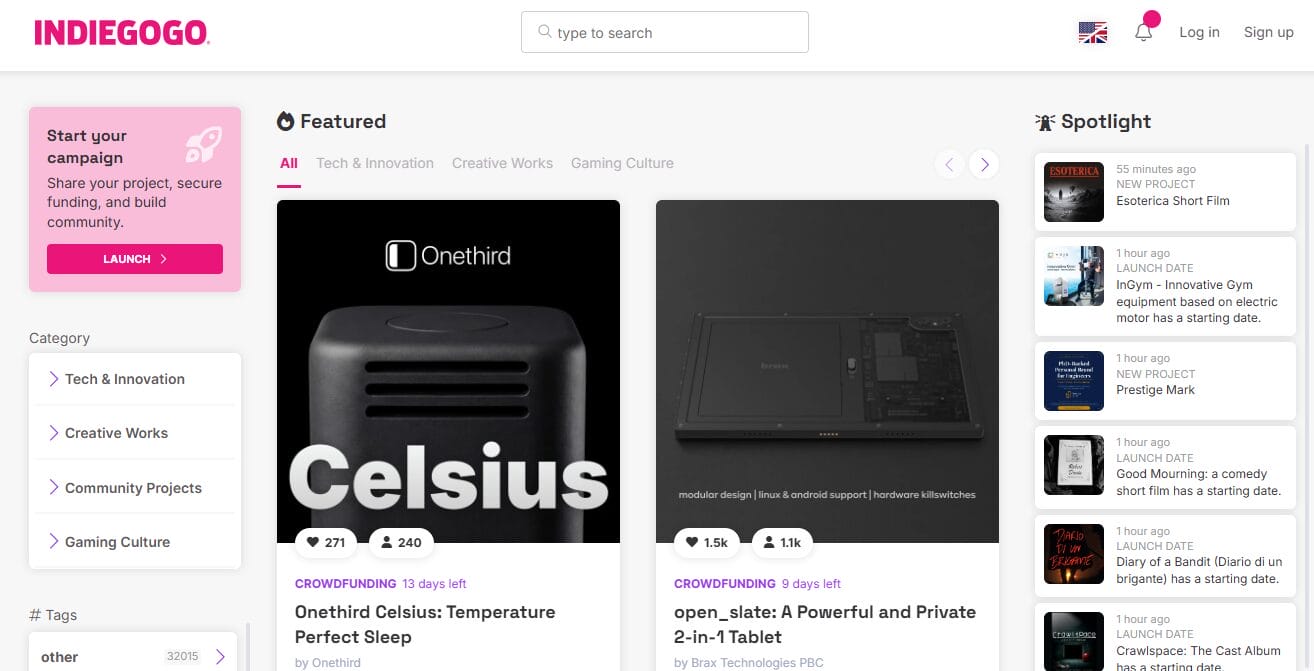
Indiegogo is often the first platform people consider when looking for Kickstarter alternatives, and for good reason. It has been around for years and has helped creators raise funds for everything from tech products to creative projects.
One of the biggest differences between Indiegogo and Kickstarter is their flexible funding option. With Kickstarter, you must reach your goal before you receive any money. Indiegogo, on the other hand, allows you to keep whatever you raise, even if you fall short of your target. This alone removes a lot of pressure and makes it a better option, especially for first-time creators.
Another reason many people choose Indiegogo is its ability to keep your campaign going even after it ends. Through its InDemand feature, you can continue accepting contributions and selling your product after your initial campaign period. This makes it easier to build momentum over time instead of relying on a short launch window.
Indiegogo Fees
Indiegogo charges a 5% platform fee on the total funds you raise. In addition to that, there are payment processing fees of 3% + 0.2 per transaction in USD/EUR/GBP.
Pros of Indiegogo
- Flexible funding option lets you keep what you raise
- Ability to continue fundraising after your campaign ends
- Wide reach with a global audience
- Suitable for different types of projects
Cons of Indiegogo
- Platform fees and transaction charges can add up
- Competition can make it harder to get noticed
- Less strict vetting means varying campaign quality
Why Indiegogo Is a Kickstarter Alternative
Indiegogo is a solid choice if you want more freedom in how you raise funds.
If the all-or-nothing model of Kickstarter feels too risky, Indiegogo offers a more flexible path. You’re not forced to hit a specific number before accessing your funds, and you have the option to keep earning even after your campaign ends.
For creators who want a bit more freedom and less pressure, Indiegogo is one of the closest and most practical alternatives to Kickstarter.
2. GoFundMe
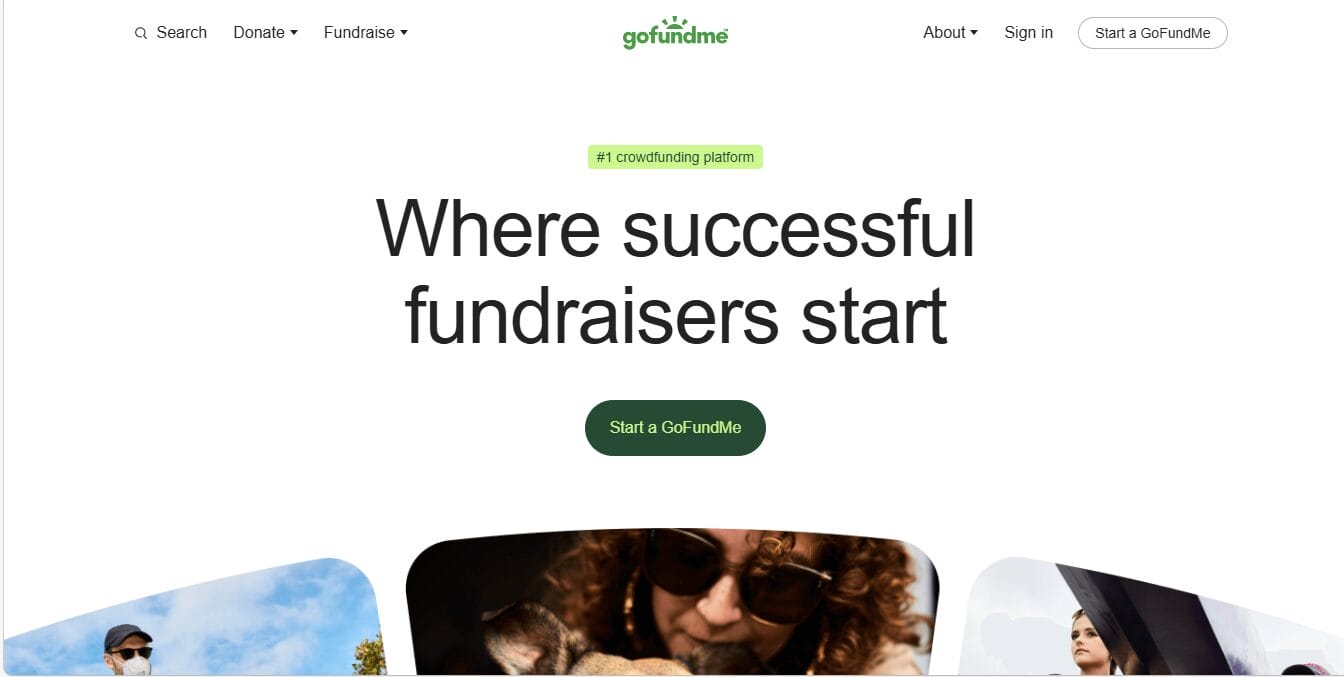
GoFundMe is an excellent fundraising platform, but it works quite differently from traditional crowdfunding sites like Kickstarter. Instead of focusing on product launches or creative rewards, GoFundMe is built around helping people raise money for personal causes, emergencies, and community support.
One thing that makes GoFundMe appealing is how easy it is to get started. You don’t need to create reward tiers or plan out complex campaign structures. You can set up a page, tell your story, and begin receiving donations almost immediately. This makes it a good option for situations where speed matters, such as medical expenses or urgent needs.
Another difference is that there is no all-or-nothing requirement. You can access the funds as they come in, without worrying about hitting a specific goal. This removes a lot of pressure and allows you to focus on sharing your story and reaching out to people willing to support your cause.
GoFundMe Fees
GoFundMe does not charge a platform fee for most personal campaigns. However, there are payment processing fees, which are usually around 2.9% plus a small fixed amount per donation, depending on your location.
Pros of GoFundMe
- Works for many types of crowdfunding campaigns
- No platform fee for personal fundraising
- Easy and quick to set up
- No funding goal requirement
- Large monthly audience, giving your campaign good visibility
- Supports community-driven and cause-based projects
- Focused more on helping people and causes than on business funding
Cons of GoFundMe
- Not suitable for product launches or startups
- Relies heavily on personal networks and sharing
- Limited features for building long-term income
Why GoFundMe Is a Kickstarter Alternative
GoFundMe offers a very different approach compared to Kickstarter. While Kickstarter focuses on structured campaigns with rewards, GoFundMe is all about simple, donation-based fundraising. You don’t need to worry about meeting a target before accessing your money, and you don’t need to offer anything in return.
3. Patreon
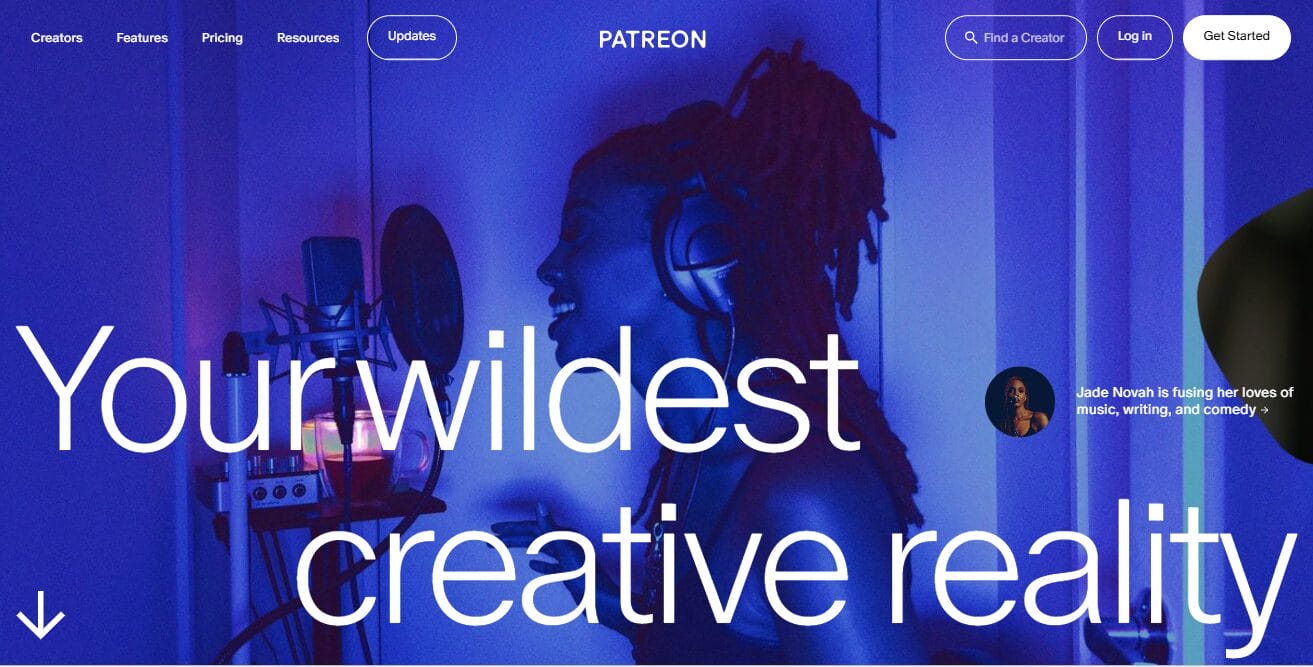
Patreon takes a different approach to crowdfunding compared to platforms like Kickstarter. Instead of focusing on a single campaign, it allows creators to earn ongoing support from their audience. This makes it a great option for people who create content regularly and want a more consistent way to generate income.
With Patreon, you set up membership tiers and offer exclusive content or perks to your supporters. This could be anything from behind-the-scenes updates and early access to content, to private communities and special rewards. Your audience subscribes and pays either monthly or per creation, which means your income grows as your community grows.
Another reason many creators choose Patreon is the connection it builds with supporters. Rather than one-time backers, you’re building a group of people who follow your work over time. This creates a more stable and predictable source of income, especially if you plan to keep creating content or expanding your brand.
Patreon Fees
Patreon offers different pricing plans, and the platform fee usually ranges from 5% to 12% of your earnings, depending on the plan you choose. On top of that, there are payment processing fees that vary by payment method and the supporter’s location.
Pros of Patreon
- Recurring income instead of one-time funding
- Ability to build a loyal community
- Flexible membership tiers
- Can track funds, growth, and other metrics
- Suitable for ongoing content creation
- Has its own mobile app to attract the widest audience
- Lots of resources to help you learn and grow
Cons of Patreon
- Platform and processing fees reduce earnings
- Requires consistent content to keep subscribers
- Growth can take time without an existing audience
Why Patreon Is a Kickstarter Alternative
Patreon is a great alternative if you’re not interested in running a one-time campaign.
While Kickstarter focuses on funding a single project, Patreon helps you earn a continuous income from your audience. Instead of starting over after each campaign, you build a steady income stream that grows over time.
4. Fundable
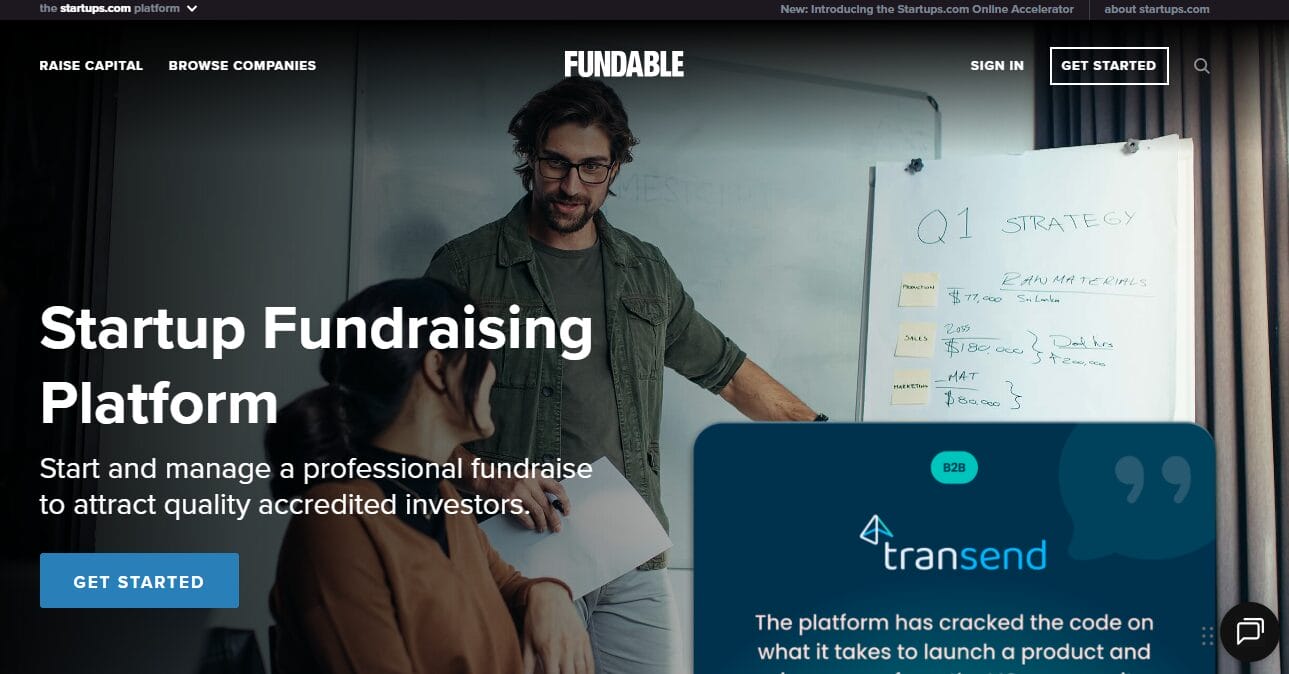
Fundable is a crowdfunding platform designed for startups and growing businesses. Unlike platforms that focus mainly on creative projects or personal causes, Fundable is built for founders seeking serious funding for their business ideas. It gives you a more business-focused environment in which your campaign is treated as an investment opportunity.
One thing that makes Fundable different from platforms like Kickstarter is that it supports both reward-based and equity crowdfunding. This means you can either offer perks to backers, like early access to your product, or raise money by offering shares in your company. This flexibility gives you more options for structuring your funding.
Fundable also provides a more guided experience when setting up your campaign. Instead of just launching and hoping for the best, you’re encouraged to present your business clearly and professionally. This includes sharing your business model, financial projections, and long-term vision, which can help attract more serious backers.
Fundable Fees
Fundable uses a different pricing model compared to many crowdfunding platforms. Instead of taking a percentage of your funds, it charges a monthly subscription fee of around $179.
If you choose equity crowdfunding, there may also be additional fees depending on how your campaign is structured. Payment processing fees may still apply to transactions.
Pros of Fundable
- Supports both reward-based and equity crowdfunding
- Focused on startups and business funding
- No percentage taken from funds raised (for reward campaigns)
- Encourages professional campaign setup
Cons of Fundable
- A monthly subscription fee can be costly
- Requires more effort to prepare a detailed campaign
- Not ideal for personal or casual fundraising
Why Fundable Is a Kickstarter Alternative
Fundable is a solid option because it lets you raise funds in different ways, including equity offerings.
If you want a platform that treats your campaign like a business opportunity rather than just a project, Fundable is an excellent alternative worth considering.
5. StartEngine
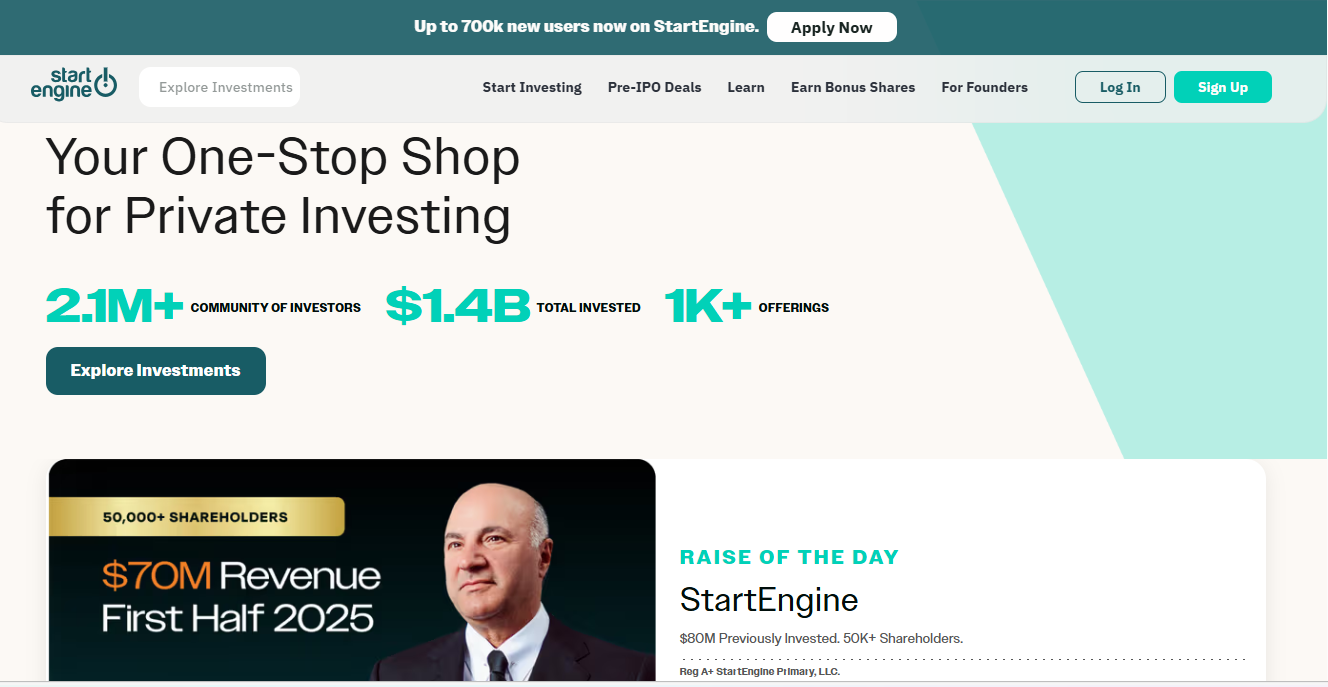
StartEngine is one of the best Kickstarter alternatives, built for startups that want to raise capital from a wide pool of investors. Unlike traditional crowdfunding platforms that focus on rewards or donations, StartEngine allows businesses to offer shares in their company. This means supporters are not just backing an idea, they are investing in its future.
One thing that sets StartEngine apart from platforms like Kickstarter is the type of audience it attracts. Instead of casual backers, you’re dealing with individuals who are interested in investing and earning returns. Because of this, campaigns on StartEngine tend to be more detailed, often including financial information, business plans, and growth projections.
StartEngine also supports a wide range of industries, from tech startups to consumer products and even real estate ventures. If you’re building a business with long-term growth in mind, it gives you the chance to raise significant funding while building a community of investors who are interested in your success.
StartEngine Fees
StartEngine charges a platform fee of approximately 3.5% of the total amount raised. In addition, companies may give up a small percentage of equity to the platform as part of the deal.
There are also payment processing and escrow fees, which vary depending on your campaign structure and the total funds raised.
Pros of StartEngine
- Access to a large network of investors
- Ability to raise significant capital
- Suitable for startups and growing businesses
- Builds a community of investors around your brand
- Investors can become mentors, helping you learn and grow
Cons of StartEngine
- Higher fees compared to some other platforms
- Requires detailed business and financial information
- Not suitable for small or casual projects
- Regulatory requirements can be complex
Why StartEngine Is a Kickstarter Alternative
StartEngine takes a different approach compared to Kickstarter. Instead of offering rewards or pre-orders, it lets you raise money by giving investors a share in your company. That means the people supporting you are not just interested in your idea, they’re interested in seeing your business grow over time.
6. FundRazr
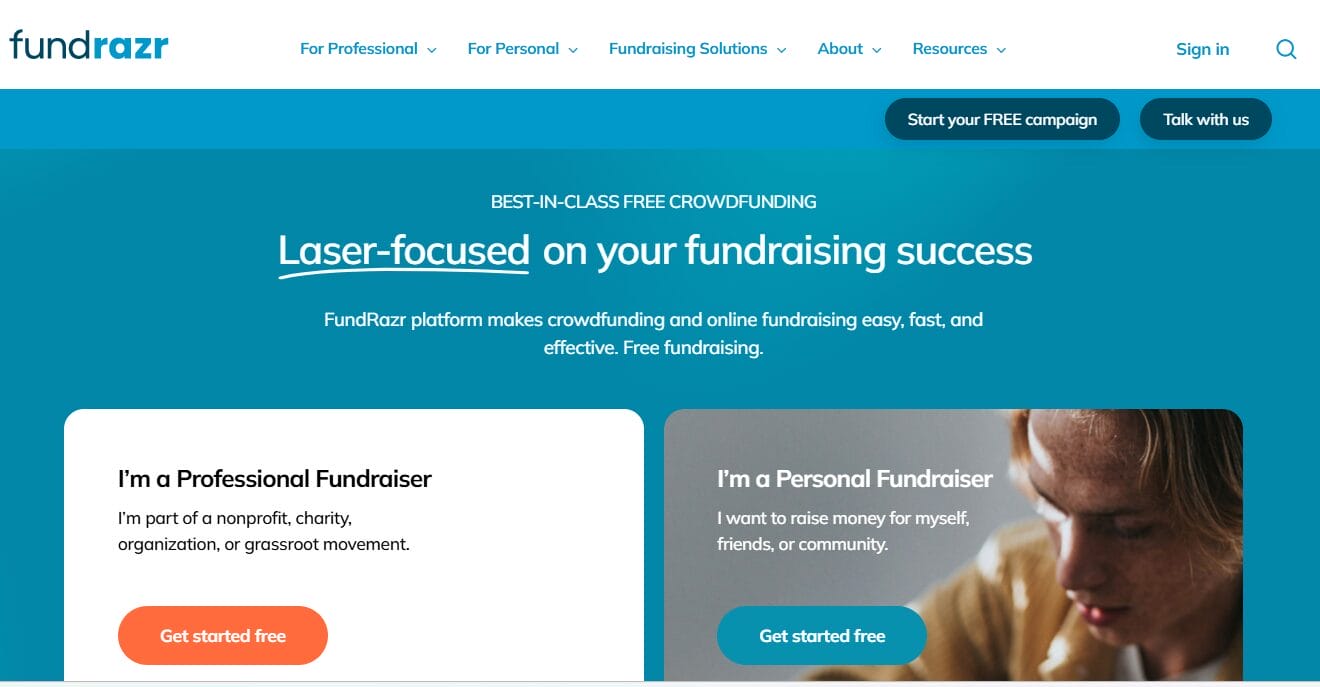
FundRazr is another alternative to Kickstarter that supports a wide range of campaigns, from personal fundraising to nonprofit projects and even small business ideas.
One thing people like about FundRazr is how it gives you control over how your campaign runs. Unlike platforms that force you into one funding style, FundRazr allows both fixed funding and flexible funding. This means you can decide whether to keep all the funds you raise or only receive money after you reach your goal.
Another area where FundRazr shines is its focus on social sharing. The platform is built to work closely with social media, making it easier to spread your campaign and reach more people. If your success depends on sharing your story and getting support from your network, this can make a real difference.
FundRazr Fees
FundRazr offers three pricing options. One option is free, where you don’t pay a platform fee, but standard payment processing charges still apply, usually around 2.9% plus $0.30 per transaction, along with an optional tip.
The other two options include a 5% platform fee taken from the total amount raised, in addition to the payment processing fees.
Pros of FundRazr
- Flexible funding options
- Easy to share across social media
- Suitable for personal, nonprofit, and small business campaigns
- Simple setup with clear division between professionals and individuals
- Training and resources to help with fundraising
Cons of FundRazr
- Less exposure compared to larger platforms
- Relies heavily on your own audience for traffic
Why FundRazr Is a Kickstarter Alternative
FundRazr offers more freedom in how you raise money compared to Kickstarter. You are not locked into an all-or-nothing model, and you can run your campaign in a way that fits your needs. It also works well for causes and community-driven projects, not just product launches.
If you want a platform that gives you flexibility and relies more on your own network, FundRazr is a practical alternative to consider.
7. Crowdfunder
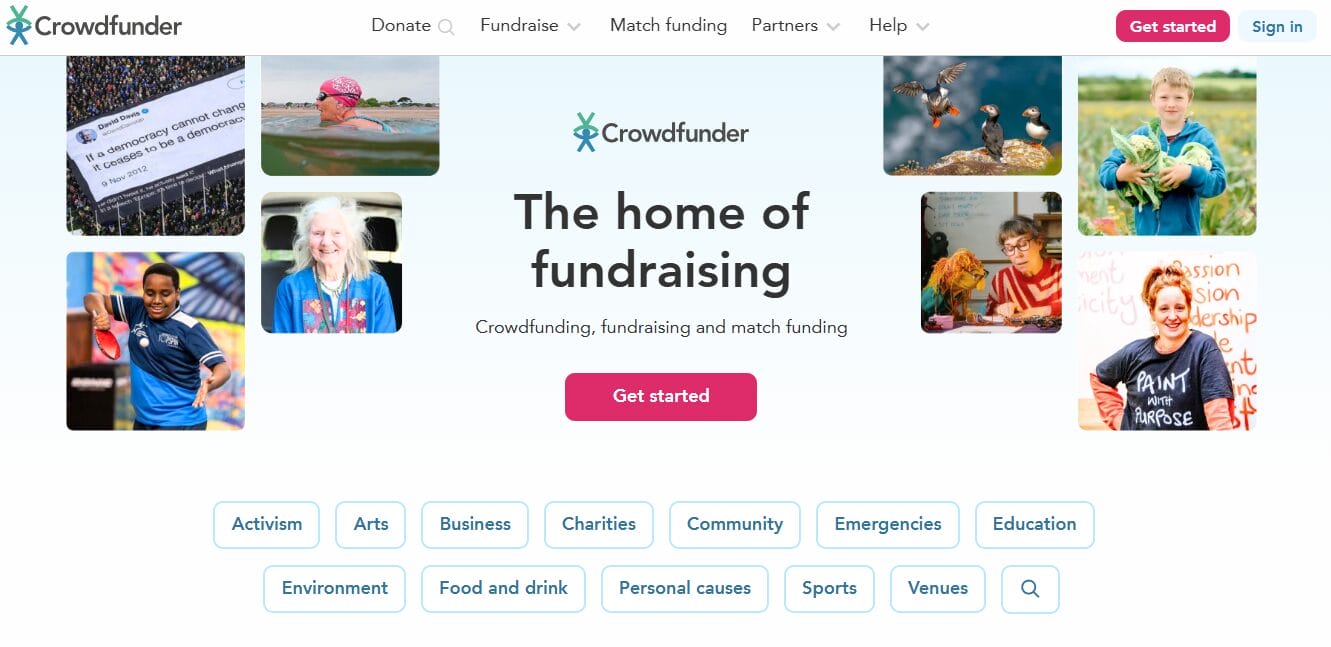
Crowdfunder is a UK-based Kickstarter alternative that helps startups and growing businesses raise capital by connecting them with investors.
What makes Crowdfunder different from platforms like Kickstarter is the type of funding it supports. Instead of offering perks or early access to products, you’re inviting investors to take a stake in your company. Because of this, campaigns on Crowdfunder tend to be more business-focused, often including detailed information about your market, revenue plans, and long-term vision.
Another thing to note is that Crowdfunder emphasizes connections. It’s not just about listing your campaign and waiting for backers. The platform helps you network with potential investors, which can open doors beyond just funding. This can be especially helpful if you’re looking for strategic partners or long-term support for your business.
Crowdfunder Fees
Crowdfunder does not charge a platform fee for most campaigns, but transaction fees usually range from about 1.9% to 2.4% plus a small fixed amount per pledge.
For-profit campaigns typically include a 5% platform fee, while community share offers have a reduced percentage based on the amount raised.
Additional fees may apply for extra funding features, and VAT is added where applicable.
Pros of Crowdfunder
- Bigger scope than Kickstarter, covering more types of fundraising
- Connects you with potential investors
- Encourages detailed and professional campaigns
- UK-based but has a global reach
Cons of Crowdfunder
- Needs a well-prepared business pitch
- Less suited for creative or small-scale projects
Why Crowdfunder Is a Kickstarter Alternative
Crowdfunder offers a different path compared to Kickstarter; it goes beyond just funding startups and new business ideas. It also allows you to support community projects and make a real impact.
8. Build Your Own Crowdfunding System with ProfilePress
So far, we’ve looked at Kickstarter alternatives that help you raise money, each with its own approach and limitations. But what if you didn’t have to rely on any crowdfunding platform at all?
Instead of choosing between different platforms, you can create your own system and raise funds directly from your audience. It might sound like a lot at first, but it’s more achievable than you may think.
With WordPress and ProfilePress, you can set up a page where people can support your work, subscribe to your content, or pay for access to what you offer. You’re not limited to one campaign or a fixed deadline. Your website becomes the place where everything happens.
How It Works
The first step is to decide on a name for your project or brand and get your website ready. This includes buying a domain name and choosing a hosting provider to get your WordPress site online. Once that’s done, you can install WordPress and set up a theme for your site.
Next, create a page that explains what you’re building. This is where you tell your story, share your idea, and let people know why they should support you. Think of it like your campaign page, but one that you fully control.
After that, install ProfilePress and connect your payment options (Stripe, PayPal, Mollie, Razorpay, Paystack, etc.). This allows you to accept payments directly from your audience. You can choose to receive one-time contributions, set up recurring subscriptions, or combine both, depending on your goals.
Then, set up your support tiers or membership plans. For example, you might offer different levels of access, perks, or content based on how much someone is willing to contribute. This works similarly to reward tiers on platforms like Kickstarter, but with more freedom.
You can also decide what your supporters get access to. With ProfilePress, you can restrict certain pages, downloads, or content so that only paying users can view them.
Once everything is in place, the final step is promotion. Share your page with your audience on social media, via email, or through any other channel you use. As people begin to support your work, your system continues to grow over time, giving you a steady way to earn and build your community.
Costs Involved
Building your own crowdfunding system with ProfilePress does not come with platform fees, but there are a few basic costs you should be aware of.
First, you’ll need a domain name and web hosting to get your website online. A domain is your website address, and hosting is what keeps your site running. These are usually affordable and are paid monthly or yearly, depending on your provider.
Next, you’ll need ProfilePress itself. It’s a premium plugin, so you’ll choose a plan based on the features you need. This gives you access to payment options, membership plans, and content restriction features that power your crowdfunding setup.
You’ll also have payment processing fees to consider. These come from payment providers like Stripe or Paystack and are charged per transaction. The exact amount depends on the provider and your location, but it’s standard practice to accept online payments.
Aside from these, any additional costs are optional. For example, you might choose to invest in a premium WordPress theme, email marketing services, or design improvements to make your page more appealing.
Overall, the costs are predictable and often lower compared to giving up a percentage of your funds to a third-party platform.
Pros of Building Your Own System
- Full control over how your crowdfunding system works
- No platform restrictions or approval requirements
- Ability to earn continuously without campaign deadlines
- You own your audience and can engage them directly
- Flexible options for payments, subscriptions, and content access
- No platform fees that take a percentage of your funds
- Your website can grow with your brand over time
Cons of Building Your Own System
- You are responsible for promoting your campaign and attracting supporters
- Initial setup takes time, especially if you’re new to WordPress
- You’ll need to manage and maintain your website
- No built-in audience like platforms such as Kickstarter
Why Building Your Own System Is a Kickstarter Alternative
Building your own system offers a different way to approach crowdfunding compared to Kickstarter.
Instead of running a short campaign with a fixed goal, you set up a system that lets people support you over time. There’s no pressure to hit a specific number before you can access your funds, and you’re not limited by campaign deadlines.
Another difference is ownership. With your own system, your audience belongs to you. You can communicate with them directly, build relationships, and continue offering value long after your initial idea is launched.
It also gives you more freedom to structure your funding. You can accept one-time payments, offer subscriptions, or combine different options based on what works best for your project.
If you want more control and a way to keep earning beyond a single campaign, building your own crowdfunding system with ProfilePress is a solid alternative.
How to Choose the Right Kickstarter Alternative
With so many options available, choosing the right Kickstarter alternative comes down to understanding what you really need.
Start by thinking about your goal. Are you trying to raise money for a one-time project, or do you want ongoing support? If it’s a single launch, platforms like Indiegogo may be a good fit. If you’re looking for recurring income, a membership-based option like Patreon might be a better fit.
Next, consider how much control you want. Third-party platforms are easier to set up, but they come with rules, fees, and limitations. If having full control over your audience and earnings matters to you, building your own system with ProfilePress could be a better choice.
You should also think about your audience. Some platforms already have built-in users who can discover your campaign, while others depend on you to bring your own traffic. If you already have an audience, running your own system becomes much more effective.
Finally, look at the costs involved. Platform fees, transaction charges, and subscription costs can affect how much you actually keep. It’s important to choose an option that fits your budget while still supporting your goals.
At the end of the day, the right choice depends on what you’re building and how you plan to grow it.
FAQs About Kickstarter Alternatives
Q1. Can I use multiple crowdfunding platforms at the same time?
Yes, but it’s important to manage campaigns carefully to avoid confusing backers. Each platform has its own rules, so ensure your campaigns don’t violate any policies.
Q2. Is building my own crowdfunding system worth it?
Building your own system gives you full control over design, data, and fees. However, it requires technical skills, hosting, and ongoing maintenance, which can be costly and time-consuming.
Q3. How do I choose the right Kickstarter alternative?
Consider your project type, target audience, funding model, platform fees, and ease of use. Some platforms are better for creative projects, while others are ideal for charitable causes or subscriptions.
Q4. How can I promote my crowdfunding campaign effectively?
Use social media, email marketing, influencer partnerships, and press coverage. Engaging visuals, clear messaging, and regular updates can significantly improve funding chances.
Q5. Which platform is best for beginners?
GoFundMe and Indiegogo are easy to use and require little technical setup, making them good starting points.
Q6. Is crowdfunding still worth it in 2026?
Yes, crowdfunding is still a powerful way to validate ideas, raise funds, and build an audience—all at once.
Final Thoughts on Kickstarter Alternatives
Choosing the right crowdfunding platform can make or break your project. While Kickstarter is popular, many alternatives offer unique features, lower fees, or better suitability for your project type. Platforms like Indiegogo, GoFundMe, Patreon, and Fundable give creators flexibility, whether you want one-time funding, recurring support, or full control over your campaign.
For those who want complete ownership and customization, building your own crowdfunding system with ProfilePress is an excellent option. It allows you to create a secure, fully-managed platform for your project, manage users, accept payments, and customize your site exactly the way you want.
Take the first step today and turn your crowdfunding idea into a reality.