
18 Retention Ideas to Reduce Membership Churn Rate
Do you want to reduce membership churn rate and keep more of your members active for longer?
Membership churn is one of the biggest challenges for any subscription-based business. You bring in new members, things start to grow, and everything feels on track. But over time, some members lose interest, stop engaging, and eventually cancel.
At first, it may not seem like a big issue. But as cancellations add up, they start to affect your revenue and slow down your growth.
In this guide, you’ll learn what churn rate is, why member retention matters, and excellent retention ideas to reduce membership churn rate, keep your members engaged, and turn casual subscribers into loyal, long-term members.
What Is Churn Rate?
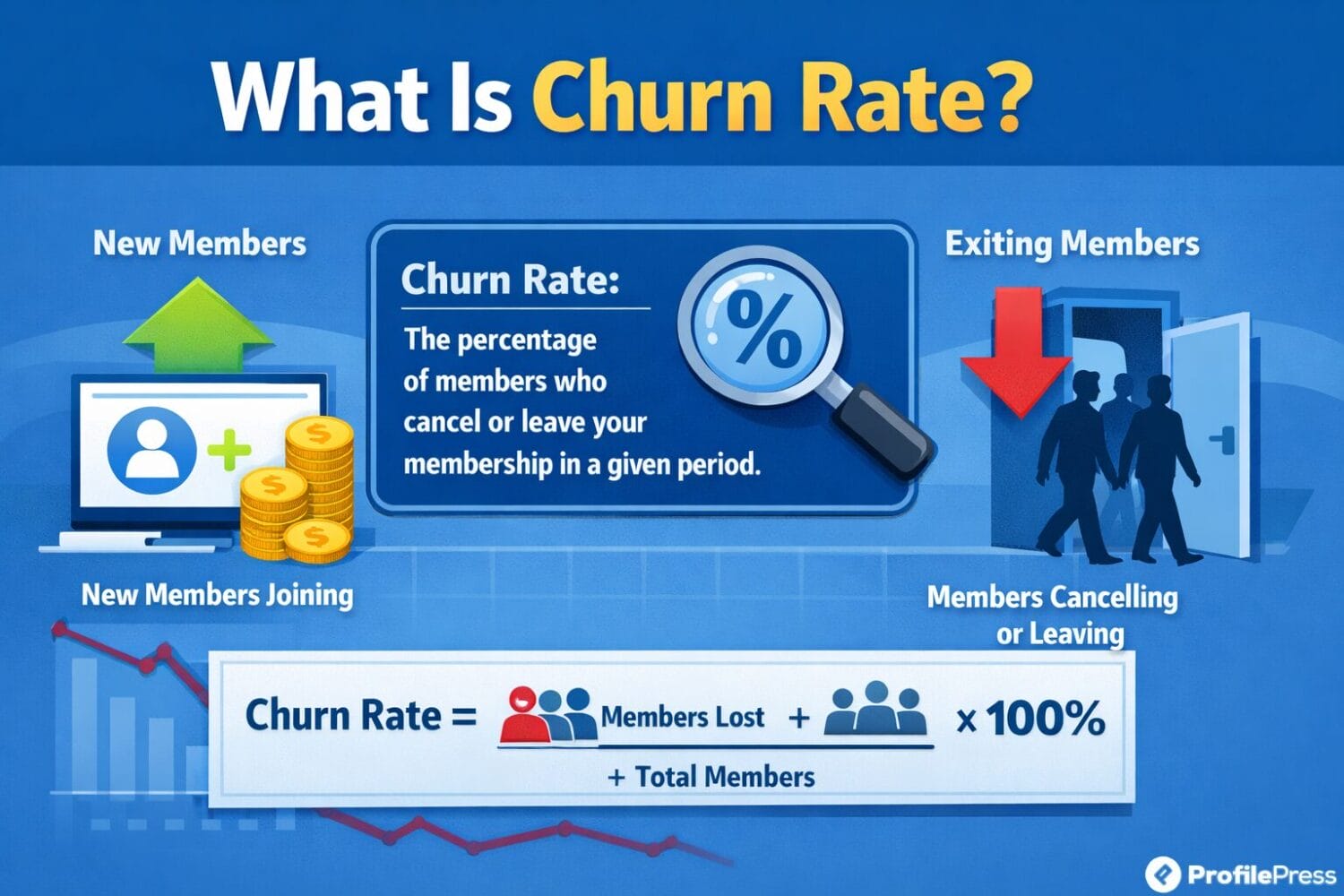
Churn rate is the percentage of members who cancel or stop using their membership within a specific period. It’s one of the most important metrics for any subscription-based business because it tells you how many people are leaving compared to how many are staying.
For example, if you start the month with 1,000 members and 50 of them cancel before the month ends, your churn rate is 5%. That might not sound like much at first, but over time, those small losses add up quickly. Month after month, you’re losing a portion of your audience, and if you’re not replacing them fast enough, your growth starts to stall.
This is why churn is often called a silent killer. It doesn’t always hit you all at once. Instead, it slowly eats into your membership base in the background while you’re focused on getting new signups.
There are actually two types of churn:
Voluntary churn – when members actively cancel because they no longer see value, lose interest, or find an alternative
Involuntary churn – when cancellations happen due to failed payments, expired cards, or billing issues
Both matter. But voluntary churn is usually the bigger problem because it points to deeper issues like low engagement, poor onboarding, or unclear value.
Why Member Retention Matters
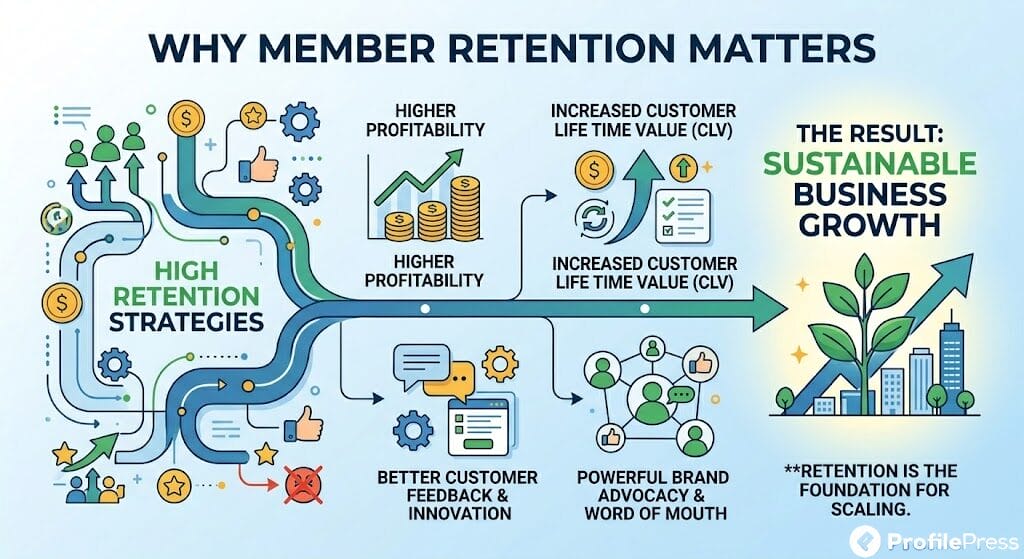
Member retention plays a central role in the long-term success of any membership business. Here are the main reasons it deserves your full attention:
Stabilizes Your Revenue: When members stay longer, your income becomes more predictable. Instead of worrying about how many people might cancel this month, you start to see consistent revenue coming in. That stability gives you room to plan, invest in improvements, and grow your business with confidence. Without good retention, your revenue will always feel uncertain, no matter how many new members you bring in.
Reduces Your Marketing Costs: You spend time and money on ads, content, promotions, and sales funnels. But keeping existing members costs much less because they already know you and trust your offer. When your retention improves, you don’t need to spend as much trying to replace people who leave. That means more profit and less pressure on your marketing efforts.
Increases Customer Lifetime Value: Not all members are equal. Someone who stays for one month brings in far less value than someone who stays for six months or a year. The longer people remain subscribed, the more they contribute to your revenue. Improving retention directly increases customer lifetime value (CLV), which is one of the most important metrics for long-term growth.
Boosts Word-of-Mouth and Referrals: Happy members talk. When people enjoy your membership and stick around, they’re more likely to recommend it to friends, colleagues, or their audience. These referrals are powerful because they come with built-in trust. In many cases, your most loyal members become your best promoters without you even asking.
Builds an Effective Community: Retention goes beyond money; it creates connection. When members stay longer, they start to engage more. They participate in discussions, attend events, and interact with others. Over time, this builds a sense of belonging. And once people feel like they’re part of a community, leaving becomes much harder.
Helps Improve Your Product: Long-term members give better feedback. They’ve experienced your membership over time, so they can tell you what’s working and what isn’t. This kind of insight is far more valuable than feedback from someone who only stayed briefly. With better feedback, you can make smarter improvements that benefit everyone.
When it comes down to it, member retention is what transforms short-term wins into lasting growth. It’s not only about bringing people in. It’s about making them want to stick around.
So, how do you make that happen? Below are proven membership retention strategies you can start using right away.
1. Improve Your Onboarding Process
The moment someone joins your membership is more important than most people realize.
Think about it, this is when expectations are at their highest. Your new member is curious, motivated, and ready to explore what you offer. But if they land inside your platform and feel confused, overwhelmed, or unsure of what to do next, that excitement fades quickly. And once that initial momentum is lost, it’s very hard to get it back.
That’s why your onboarding process matters so much. A good onboarding experience acts like a guide. It shows new members exactly where to start, what to focus on, and how to get value as quickly as possible. Instead of leaving them to figure things out on their own, you’re walking them through the journey step by step.
You can improve your onboarding by using these helpful elements:
- A short welcome email series that introduces your platform step by step
- A checklist that shows what to do first
- Quick walkthrough videos for important sections
- Clear navigation so members don’t feel lost
When your onboarding is done right, new members feel comfortable, confident, and ready to explore more. And when people experience value early, they’re far more likely to stick around.
2. Deliver a Quick Win Early
When someone joins your membership, they’re not just looking for access; they’re looking for a reason to feel like they made the right decision. And that feeling needs to come quickly. If too much time passes without any clear benefit, doubt starts to creep in. They begin to wonder if it’s really worth it, and that’s when disengagement begins.
This is where a quick win makes all the difference.
A quick win is a small, meaningful result that a new member can achieve within a short time after joining. It doesn’t have to be something big or life-changing. What matters is that it’s easy to complete and delivers an immediate sense of progress.
Think of it like this…
If someone joins a fitness membership and sees a simple routine they can finish in 10 minutes, they feel accomplished right away. If someone joins an online course and completes a short lesson that teaches them something useful, they feel like they’re already gaining value. That early success builds confidence and encourages them to keep going.
The mistake many membership owners make is focusing too much on the full experience instead of the first experience. They pack their platform with content and features, but forget to highlight that one thing that can help a new member feel progress almost instantly.
When someone experiences that early win, something shifts. They stop feeling like a new user and start feeling like someone who is already benefiting from your membership. That small moment of success builds trust and creates momentum, helping you reduce membership churn rate from the very beginning.
3. Personalize the Member Experience
Nobody likes feeling like just another number.
When people join your membership, they want to feel seen, understood, and valued. If every member gets the same experience regardless of their interests or goals, it can start to feel generic. And when something feels generic, it’s easier to walk away from it.
That’s why creating a more personal experience can make a big difference in how long people stay.
This comes down to making your membership feel relevant to each individual. Instead of showing everyone the same content or sending the same messages, you adjust what they see based on who they are, what they need, or how they interact with your platform.
You can start by grouping members based on factors like:
- Their interests or goals
- Their activity level
- Their membership plan
- Where they are in their journey (new vs long-time member)
From there, you can adjust what they see or receive. For example, new members might get guidance and helpful tips, while long-time members might receive advanced content or exclusive updates.
Another important part of this is communication.
Instead of sending the same message to everyone, speak to different groups in ways that feel relevant to them. When your emails or notifications reflect what a member actually cares about, they’re much more likely to pay attention and take action.
The goal isn’t to make things complicated. It’s to make your members feel like your platform understands them.
When people feel that connection, they engage more. And when they engage more, they’re far less likely to leave.
4. Build an Active Community

An active community gives your membership real meaning beyond the content or services you offer. When people feel connected to others, they are far less likely to leave. This sense of belonging is one of the most effective ways to reduce membership churn rate because members are not just paying for access; they are staying for relationships, conversations, and shared experiences.
Start by creating spaces where members can interact easily. This could be a private forum, a members-only group, or a built-in community area on your website.
Encourage conversations instead of one-sided communication. Ask questions, start discussions, and invite members to share their thoughts, wins, and challenges. When members feel heard and involved, they become more invested in staying active. Even simple prompts, such as weekly discussion topics or polls, can keep engagement alive.
It’s also important to recognize and highlight your members. Feature active members, celebrate milestones, and acknowledge contributions publicly within the community. This makes people feel valued and appreciated, which goes a long way toward reducing the membership churn rate.
Another powerful approach is to make your community feel welcoming from day one. New members should never feel lost or ignored. Consider setting up welcome threads, onboarding messages, or introductions that encourage them to participate right away. The faster someone feels like they belong, the less likely they are to leave.
You can also strengthen your community by organizing events such as live Q&A sessions, webinars, or group challenges. These moments bring members together in real time and deepen their connection with both you and other members.
Finally, be present. A community without active leadership quickly becomes quiet and disengaged. Respond to comments, guide discussions, and keep the environment positive and respectful. Your involvement sets the tone and encourages others to participate.
When members build relationships and feel part of something meaningful, leaving becomes much harder. That emotional connection helps reduce the membership churn rate and turns casual members into loyal, long-term participants.
5. Offer Consistent Value
People don’t cancel because you failed once. They cancel because the value becomes unclear over time.
When someone joins your membership, they believe it’s worth paying for. But that belief isn’t permanent. It needs to be reinforced again and again. If weeks go by and they don’t feel like they’re gaining anything useful, the question naturally comes up: “Do I still need this?”
That’s where consistency comes in. Offering value once isn’t enough. You need to keep showing your members, in small but meaningful ways, that staying subscribed makes sense. This doesn’t mean constantly adding new content or doing something big every week. It means making sure your membership continues to feel useful, relevant, and worth their attention.
Think of it like this…
If someone goes to the gym and sees results, they keep going. But if they stop seeing progress, they start skipping sessions. The same thing happens with memberships. When members feel like they’re gaining something, whether it’s knowledge, results, support, or progress, they stay engaged. When that feeling fades, so does their commitment.
One way to maintain consistent value is by keeping your content active. Instead of letting your platform sit untouched, update existing materials, add fresh insights, and keep things current. Even small updates can remind members that your membership is alive and evolving.
Another part of this is communication. If you’re adding new content or improvements but not telling your members about it, they may never notice. Regular updates, emails, or announcements help highlight what’s new and remind them what they’re getting.
You should also consider how your membership fits into your members’ daily or weekly routines. The more useful and accessible your content is, the easier it becomes for them to keep coming back. When your membership becomes part of their routine, it’s much less likely to be canceled.
It’s also worth paying attention to what your members actually use. Some content will be more valuable than others. By observing what gets attention and engagement, you can focus more on what works and improve or replace what doesn’t.
6. Communicate Regularly
Out of sight = out of mind.
One of the easiest ways to lose members is to go quiet. Even if your membership has great content and real value, people can forget about it if you’re not staying in touch. Life gets busy, priorities shift, and before long, your membership becomes something they rarely think about and eventually cancel.
That’s why regular communication matters. It keeps your membership present in their daily or weekly routine. It reminds them why they joined and what they’re getting. More importantly, it keeps the connection between you and your members alive.
But communication isn’t about sending messages just for the sake of it. It’s about being helpful, relevant, and consistent.
For example, you can send updates about new content, share tips they can apply right away, or highlight something valuable they might have missed. You can also remind them of features they haven’t explored yet or encourage them to take the next step in their journey.
These small touchpoints add up. Over time, they create a sense that your membership is active and worth paying attention to. When members hear from you regularly, they’re more likely to log in, engage, and stay involved.
Another important part of communication is tone. You don’t want your messages to feel cold or overly formal. Write like you’re talking to a real person. Keep it natural, clear, and easy to read. When your communication feels human, members are more likely to connect with it.
Consistency also plays a big role. You don’t need to message your members every day, but you shouldn’t disappear for weeks either. Whether it’s once a week or a few times a month, find a rhythm you can maintain. That steady presence builds familiarity and trust over time.
It also helps to vary what you share, so it doesn’t feel repetitive. You can mix things like:
- Updates on new content or features
- Helpful tips or insights
- Reminders of what’s available
- Community highlights or member wins
This keeps your communication fresh and engaging.
7. Use Email Automation
Keeping in touch with every member manually sounds nice in theory… but in reality, it’s almost impossible as your membership grows.
That’s where email automation comes in. Instead of trying to remember who to message and when, you set up a system that sends the right emails at the right time. This way, your members stay connected to your membership without you having to chase every interaction yourself.
Think of it as having a quiet assistant working in the background, making sure no one gets ignored.
One important area to use email automation is during the early stage of a member’s journey. Right after someone joins, you can guide them step by step with a short email sequence. For example, the first email can welcome them, the next can show them where to start, and another can highlight something valuable they shouldn’t miss.
This kind of guidance helps new members settle in faster and reduces the chances of them feeling lost.
But it doesn’t stop there. You can also use automation to keep members engaged over time. If someone hasn’t logged in for a while, you can send a gentle reminder. If they’ve completed a certain action, you can follow up with what to do next. These small nudges bring people back before they drift too far away.
Another important use is around renewals and payments. Instead of surprising members with a charge or waiting until something fails, automated emails can notify them in advance. You can remind them of upcoming renewals, confirm successful payments, or alert them to anything that needs attention. This reduces confusion and helps prevent avoidable cancellations.
What makes email automation effective is timing. When messages arrive exactly when they’re needed, they feel helpful rather than intrusive. A well-timed reminder or suggestion can bring someone back at the right moment and keep them engaged.
That said, it’s important not to overdo it. Sending too many emails can feel overwhelming and push people away. The goal is to stay present without becoming annoying.
So keep your messages useful, clear, and easy to read.
8. Track Member Engagement
Tracking member engagement is another effective way to reduce member churn rate because it helps you see what your members are actually doing.
It’s easy to assume everything is fine when people sign up, but activity tells the real story. Some members log in regularly, explore your content, and stay involved. Others slowly become inactive, and if you’re not paying attention, they can drift away without warning.
That’s why engagement matters.
When you track how members interact with your platform, you start to notice patterns. You can see who is active, who is slowing down, and who hasn’t shown up in a while. These signals give you an early warning before someone decides to cancel.
Focus on simple things like how often members log in, what content they view, how long they spend on your site, and whether they open your emails. These details can tell you a lot about how connected someone feels to your membership.
For example, if a member hasn’t logged in for weeks or stopped engaging with your emails, that’s a sign they may be losing interest. Instead of waiting for them to cancel, you can step in early with a reminder, a helpful suggestion, or something valuable to bring them back.
Tracking engagement also helps you understand what’s working. You’ll start to see which content gets attention and which doesn’t. This allows you to focus more on what your members enjoy and improve areas that aren’t getting results. Over time, this makes your membership more relevant and engaging.
Another benefit is that it helps you respond differently to different members. Active members may need encouragement to go deeper, while inactive members may need a nudge to return. When you understand where your members are, your communication becomes more meaningful.
9. Introduce Loyalty Rewards
Loyalty rewards are a practical way to keep members motivated and encourage long-term commitment. When members know that their continued activity is recognized and rewarded, they are more likely to stay engaged rather than leave. This approach directly reduces membership churn by giving members a clear reason to remain active over time.
Start by creating a reward system that feels meaningful to your audience. This could include points for renewals, discounts on subscription plans, access to exclusive content, early access to new features, or special badges that highlight member activity. The goal is to make the rewards feel valuable enough that members see real benefit in staying longer.
You can also reward consistent engagement, not just payments. For example, members who frequently comment, attend events, or complete activities can earn additional perks. This helps shift the focus from passive membership to active participation, thereby strengthening retention.
It’s important to keep your loyalty program simple and transparent. Members should easily understand how they earn rewards and what they need to do to unlock them. If the system feels confusing or difficult to follow, participation will drop, and the impact on churn will be limited.
Another effective approach is to introduce tiered rewards. As members stay longer or engage more, they move up levels with better benefits. This creates a sense of progress and achievement, which encourages members to continue their journey rather than cancel their subscription.
Make sure to communicate available rewards regularly. Many members forget about benefits unless they are reminded. Emails, dashboard notifications, or in-app messages can help keep rewards visible and top of mind.
When done well, loyalty rewards turn membership into a more engaging experience where members feel appreciated and motivated. This sense of value and recognition plays a major role in helping reduce membership churn rate.
10. Provide Exclusive Content
If you’re serious about reducing the membership churn rate, offering something people can’t easily find elsewhere is no longer optional. It becomes essential.
Think about it from a member’s perspective. Why would someone continue paying month after month if the value they’re receiving feels generic, repetitive, or easily replaceable? The answer is simple: they won’t. Exclusive content acts as a magnet, keeping members engaged, curious, and, most importantly, loyal.
Now, “exclusive” doesn’t necessarily mean expensive or complicated to produce. It means intentional. It means giving your members access to something that feels unique, insider-level, and worth sticking around for. This could be behind-the-scenes insights, members-only webinars, early product releases, private community discussions, or even personalized resources.
Important fact: exclusivity taps into human psychology. People naturally place a higher value on things that are limited or not available to everyone. It creates a sense of belonging and even a little bit of FOMO (fear of missing out). When members feel that leaving means losing access to something valuable, they’re far more likely to stay. That emotional attachment is a powerful driver when you’re trying to reduce membership churn rate.
Another angle worth considering is freshness. Exclusive content shouldn’t feel static. If members log in and see the same resources month after month, the excitement fades quickly. Instead, create a rhythm, weekly drops, monthly updates, or surprise bonuses. This keeps engagement high and gives members a reason to return regularly. It’s similar to how people follow their favorite TV series; they come back because they expect something new and worthwhile.
11. Make Renewals Easy
Sometimes people don’t cancel because they want to leave, but because the process of staying feels unnecessarily complicated. That’s a silent killer when you’re trying to reduce membership churn rate.
So from the moment someone joins, it should be clear how their subscription works. They should know when they’ll be billed, how to manage their plan, and what happens if they want to continue. When this information is unclear, it creates uncertainty, and uncertainty often leads to cancellations.
One effective way to improve this is by being transparent. Let your members know in advance when their renewal is coming up. A gentle reminder helps them feel in control instead of surprised. It also gives them a moment to reflect on the value they’re getting, rather than reacting to an unexpected charge.
The process itself should also be smooth. Members should be able to update their payment details, switch plans, or continue their subscription without confusion. If they have to go through too many steps or struggle to find what they need, frustration builds quickly, and that can push them toward canceling.
12. Reduce Payment Failures
Payment failures might seem like a minor technical hiccup on the surface, but in a membership- or subscription-based business, they quietly cause some of the biggest revenue leaks. Every declined card, expired payment method, or failed transaction increases the risk of losing a customer who was otherwise happy with your service.
When these issues stack up, they directly impact your ability to reduce membership churn rate. The reality is simple: people don’t always cancel intentionally; sometimes, they just “fall off” because their payment didn’t go through, and no one successfully recovered it.
One of the most effective ways to tackle this is by implementing a dunning management system. This means you don’t just accept a failed payment and move on; you actively try to recover it.
Automated retry logic can significantly improve recovery rates by attempting the charge again at optimal times, such as when a user’s bank account is more likely to have sufficient funds. Pair this with intelligent spacing between retries so you’re not overwhelming the payment gateway or annoying the customer.
You can also improve success rates by enabling multiple payment methods like credit cards, debit cards, PayPal, or digital wallets. The more flexibility you offer, the fewer chances there are for payments to fail in the first place, which directly supports your goal to reduce membership churn rate over time.
Communication also plays a huge role here. Instead of silently failing a payment and waiting for the user to notice, proactive messaging can save the relationship. Friendly email reminders, SMS notifications, and in-app alerts give customers a chance to update expired cards or resolve banking issues quickly.
Finally, optimizing your billing system for transparency and reliability can prevent many failures before they even happen. Clear billing descriptors reduce confusion and chargebacks, while pre-expiry notifications for cards ensure users update their details in time. Even small improvements, such as allowing one-click card updates or storing multiple backup payment methods, can drastically improve recovery rates.
13. Offer Flexible Plans
Offering flexible plans is a powerful strategy to reduce membership churn rate because it allows users to stay connected to your service even when their circumstances change. Instead of forcing a harsh choice between paying full price or canceling altogether, you create a middle ground that keeps the relationship alive and adaptable.
For example, having basic, standard, and premium tiers allows users to downgrade rather than cancel entirely during financial pressure. That downgrade is not a loss; it’s a retention win. You still maintain the customer relationship, brand familiarity, and long-term lifetime value.
Another important layer of flexibility comes from billing frequency options. Some users prefer monthly payments for control, while others may choose annual plans for savings. Giving both options empowers customers to decide what works best for their cash flow.
14. Run Win-Back Campaigns
Not every customer who leaves is truly gone forever. In fact, a large portion of churned users don’t cancel because they are unhappy; they just drift away due to timing, budget constraints, distraction, or lack of engagement at the right moment.
This is exactly where win-back campaigns become a powerful strategy for reducing the membership churn rate. Instead of treating cancellation as a final goodbye, you treat it as a pause in the relationship that can be restarted with the right message, timing, and incentive.
An effective win-back strategy starts with segmentation. Not all churned users behave the same way, so sending a generic “We miss you” email rarely works. You need to group users based on their behavior before they left: highly engaged users who canceled due to pricing, low-usage users who never fully activated, or long-term members who suddenly dropped off.
Each segment requires a different emotional and value-based trigger. For example, a long-term customer might respond better to a personalized message highlighting what’s new since they left. At the same time, a low-engagement user might need a reminder of the core value they never fully explored.
Timing also plays a critical role in win-back success. Reaching out too soon can feel pushy, while waiting too long can make your brand irrelevant in the customer’s mind. Many businesses find that the first 7–30 days after cancellation is the sweet spot for re-engagement, especially when combined with meaningful updates or incentives.
These incentives don’t always have to be discounts; sometimes, a free trial extension, new feature access, or exclusive content is enough to reignite interest.
15. Ask for Feedback
One of the most overlooked yet powerful ways to understand and control churn is by asking customers why they leave, or even better, asking them before they decide to leave.
Feedback is like a diagnostic tool for your entire membership experience. Without it, you are guessing in the dark; with it, you gain direct insight into what is pushing users away and what is keeping them engaged. This makes feedback collection a foundational strategy for reducing the membership churn rate, because it helps you address the real problems instead of relying on assumptions.
Exit surveys are the most common starting point. When a user cancels their subscription, a short, simple questionnaire can reveal critical patterns, pricing concerns, low usage, missing features, or even onboarding confusion.
The goal is to keep it frictionless. If your survey feels like a chore, users will abandon it, and you lose valuable insight. A single multiple-choice question followed by an optional comment box often performs better than long, complicated forms.
Over time, these responses create a data-driven map of churn triggers that directly guide improvements to help you reduce the membership churn rate more effectively.
However, feedback should not only happen at the point of cancellation. Proactive feedback collection during the customer lifecycle is even more valuable. In-app prompts, periodic email surveys, and quick rating systems help you detect dissatisfaction early before it turns into churn.
For example, a simple “How satisfied are you today?” prompt after important interactions can highlight friction points in real time. When customers feel their voices are consistently heard, they are more likely to stay engaged and less likely to leave.
Note that the real power of feedback comes when it is actually acted upon. Collecting responses without implementing changes can make users feel ignored, which may even increase churn. But when customers see their suggestions reflected in product updates, improved features, or better support, it builds trust and loyalty. That sense of involvement transforms them from passive users into active participants in your growth.
16. Provide Excellent Member Support
In your quest to reduce the membership churn rate, providing excellent member support is essential, as support can make or break retention.
Fast, helpful responses build trust. Poor support drives people away faster than almost anything else, even if they like the product itself. When members reach out for help, they are usually already frustrated, so how that moment is handled matters a lot.
A quick, clear, and respectful response can calm the situation and reassure them that they made the right choice by staying. On the other hand, slow replies, unclear answers, or repeated back-and-forth communication can easily push users toward cancellation.
Good support is not only about speed. It is also about understanding the problem correctly the first time and resolving it without unnecessary steps. When users feel they are being heard and not passed around, their confidence in the service increases.
Another important factor is consistency. Every support interaction should reflect the same level of care, whether it occurs via email, chat, or another channel. Mixed experiences create uncertainty, and uncertainty often leads to disengagement. When members know they can rely on stable, helpful support whenever needed, they are far more likely to continue their subscription.
17. Build a Member Referral Program
A referral program is often seen as a growth strategy, but it also plays a quiet and powerful role in retention. When members invite others into your platform, they are not just helping you acquire new users; they are strengthening their own connection to your service.
This sense of involvement and shared value can directly help reduce membership churn rate, because people are less likely to leave something they actively recommend to others.
A referral program works because it turns satisfied users into advocates. When a member has a positive experience and shares it with friends or colleagues, they begin to feel a sense of ownership in the platform’s success. That emotional investment matters. Users who feel connected in this way are more likely to stay subscribed, even during moments when they might otherwise consider canceling.
In addition to emotional engagement, referral programs often create practical incentives that encourage continued participation. Rewards such as discounts, bonus features, or account credits give members a reason to remain active.
Another important aspect is social proof. When users bring others into a platform, they become part of a shared experience. This social layer makes the service harder to abandon because it is no longer just an individual decision. Friends, colleagues, or teams may all be using the same platform, creating a network effect that increases stickiness. Leaving such an environment feels like disconnecting from a group, not just canceling a subscription.
18. Continuously Improve Your Offer
Continuous improvement is one of the most reliable ways to reduce the membership churn rate, because it ensures members always see fresh value in staying subscribed rather than questioning whether the service is still worth it.
Improvement does not always mean large changes or major feature releases. Often, small and consistent updates have a greater long-term impact. Enhancing usability, refining existing features, fixing friction points, and responding to user feedback all contribute to a better experience over time.
When members notice that the service is actively improving, they feel their subscription is worthwhile, which naturally reduces the urge to cancel.
Another important element is staying aligned with evolving market expectations. Competitors will continue to raise the standard, and customer expectations will shift over time. If the offer remains static, it slowly loses relevance. Regular updates help maintain competitiveness and ensure members do not feel the need to look elsewhere for better value.
Communication also matters when improvements are made. Letting members know what has been updated reinforces the idea that their subscription is active and evolving. Even small announcements can remind users that they are part of a growing service rather than a stagnant one. This sense of progress strengthens engagement and supports efforts to reduce membership churn rate over the long term.
FAQs
Q1. What Is Member Retention?
Member retention measures the percentage of your members who continue their subscriptions over a period of time. Let’s say you begin January with 200 members. By the end of December, 180 of those same members are still paying for their subscriptions. That means your retention rate is 90%.
Q2. Why is membership churn rate important?
It shows the health of your membership business. A high churn rate means members are leaving faster than they join, which affects revenue, growth, and long-term stability.
Q3. What causes a high membership churn rate?
Common causes include poor onboarding, lack of engagement, unclear value, weak communication, payment issues, and members forgetting why they joined in the first place.
Q4. How can I quickly reduce the membership churn rate?
Start with onboarding and engagement. Help new members see value early, communicate regularly, and guide them toward meaningful actions inside your membership.
Q5. Why is community important for retention?
A community gives members a sense of belonging. When people connect with others, they are more likely to stay engaged and remain members.
Q6. How does ProfilePress help with membership retention?
ProfilePress is an excellent WordPress membership plugin that helps you create and manage membership sites, with features such as content restriction, subscription payments, user dashboards, email integrations, and flexible access control. These features help improve user experience and reduce churn.
Q7. Is it better to focus on acquiring new members or retaining existing ones?
Both matter, but retention is more cost-effective. Keeping existing members is usually cheaper and more profitable than constantly acquiring new ones.
Conclusion
We hope this article helped you learn how to reduce membership churn rate using the practical ideas shared.
As you’ve seen, keeping your members isn’t about luck. It comes down to creating a better experience at every stage, from onboarding and engagement to communication, payments, and long-term value. When these elements work together, your membership becomes something people don’t want to leave.
Main Takeaways
- Keeping existing members is far more cost-effective than constantly chasing new ones.
- Most cancellations happen because members lose interest or forget the value.e
- Early engagement plays a huge role in long-term retention
- Consistent communication keeps your membership relevant in people’s lives
- Payment issues can cause avoidable cancellations if not handled properly
- Small improvements in retention can lead to noticeable growth over time
Ready to Build a Retention-Focused Membership?
If you’re running a membership site, having the right setup makes all the difference. Instead of juggling multiple plugins and systems, ProfilePress gives you everything you need in one place.
Starting with onboarding, ProfilePress lets you create WordPress registration forms, login pages, and user dashboards. This helps you guide new members from the moment they sign up and makes it easier for them to understand where to go next.
When it comes to content and value delivery, ProfilePress makes it easy to restrict access based on membership plans. You can protect content behind a paywall and control exactly who can access what. This helps you create a sense of exclusivity that encourages members to stay subscribed.
Engagement and communication are also easier to manage. With integrations like Mailchimp, Campaign Monitor, Brevo, and MailerLite, you can stay connected with your members, send updates, and keep them engaged with your platform.
ProfilePress also helps you grow beyond just subscriptions. You can launch an affiliate program using integrations with AffiliateWP or SliceWP, turning your members into promoters who bring in new users while staying active in your ecosystem.
If you’re building a learning-based membership, ProfilePress also integrates with LMS platforms like LearnDash, LifterLMS, Sensei LMS, and MasterStudy LMS. This allows you to sell courses, control access, and enroll users automatically after payment, helping you create a structured learning experience that keeps members engaged for longer.
For community-driven memberships, ProfilePress works seamlessly with platforms like BuddyBoss, BuddyPress, and FluentCommunity. This allows you to build private groups, community spaces, and member-driven discussions that increase interaction and long-term retention.
On the payment side, ProfilePress supports multiple gateways like Stripe, PayPal, Paystack, RazorPay, and Mollie. This flexibility helps reduce failed payments and gives members options that work best for them. It also supports recurring payments, making renewals smoother and reducing accidental cancellations.
Another important part of retention is giving members control over their accounts. ProfilePress provides a user dashboard where members can update their details, manage subscriptions, and easily manage their profiles. When members can manage things without frustration, they are more likely to stay.
So get ProfilePress today and start building a membership that people not only join but also stay in.