
Looking for how to create a pricing table in WordPress to display and sell your membership plans?
In this article, you will learn three ways to do it: with the pricing table built into ProfilePress, with the Pricing Table by Supsystic plugin, and with the Tableberg block.
Method 1: Use the Pricing Table Built Into ProfilePress
If you sell your membership plans with ProfilePress, you don’t need another plugin. The [profilepress-plans] shortcode shows your plans as pricing cards on any page, and each card’s button opens that plan’s checkout.
Each card shows the plan name, its price and billing period (such as “$29.00 / month” or “Free”), any free trial, number of payments or sign-up fee, and the plan’s description. Because the cards are built from your plans, your pricing page updates itself when you change a price.
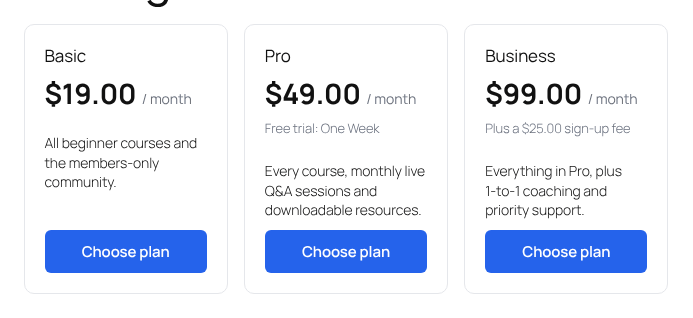
Here’s how to set it up:
- Create your plans. Go to ProfilePress » Membership Plans and add a plan for each tier. Give each one a description that says what it includes, since that’s what the card shows. See how to create membership plans.
- Put the plans in a plan group. Under Membership Plans » Plan Groups, add a group with the plans you want to compare, such as Basic, Pro and Business. Members can then upgrade and downgrade between them. See plan groups.
- Copy the shortcode. Edit the group and click Copy Shortcode in the Pricing Section Shortcode box. It looks like
[profilepress-plans group="2"]. - Create the pricing page. Go to Pages » Add New, add a Shortcode block, paste the shortcode and publish.
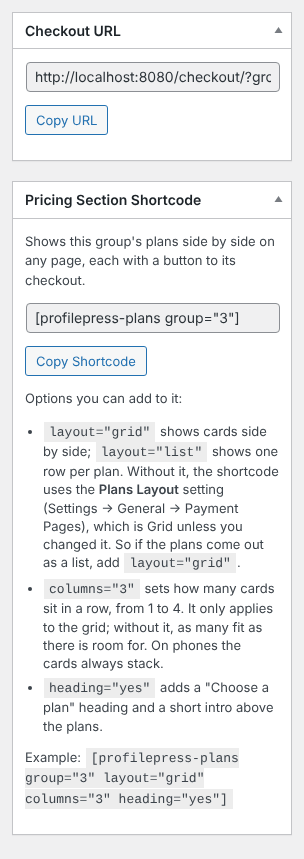
You can change how the table looks with a few options:
layout="list"shows one row per plan instead of cards, which is easier to compare when you sell many plans.columns="3"sets how many cards sit in a row, from 1 to 4.heading="yes"adds a “Choose a plan” heading and a short intro.plans="8,3,1"shows just those plans, in that order, instead of a group.
Signed-in members see their current plan marked. The other plans in the group show a Switch to {Plan} button that opens the plan change checkout with prorated pricing, so your pricing page doubles as an upgrade page.
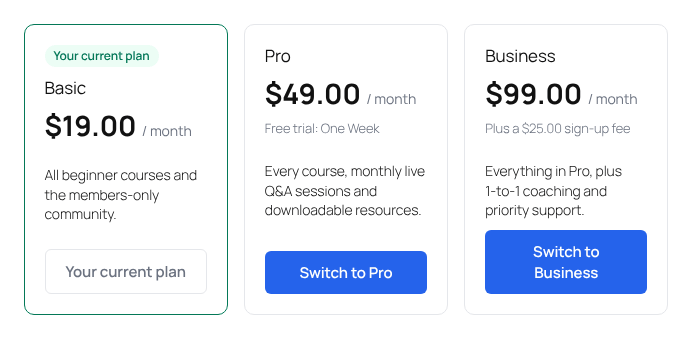
ProfilePress also shows the same cards on your checkout page when someone opens it without choosing a plan, so a “Pricing” link in your menu can simply point to the checkout page.
For every option, see how to show membership plans on any page.
If you’d rather design the table yourself, with your own colors, icons and feature lists, use one of the pricing table plugins below and link its buttons to your plans’ checkout pages.
Method 2: Use the Pricing Table by Supsystic Plugin
Let’s say we are selling a service or a product to the visitors of our demo site. Here’s what we need to do to get our online business up and running:
- Create Membership or Subscription Plans
- Build a Pricing Table
- Add Membership or Subscription Plans to the Table
- Create a Pricing Page
Before we examine each step in detail, we need to install and activate the pricing table plugin on our WordPress site.
Installing the Pricing Table WordPress Plugin
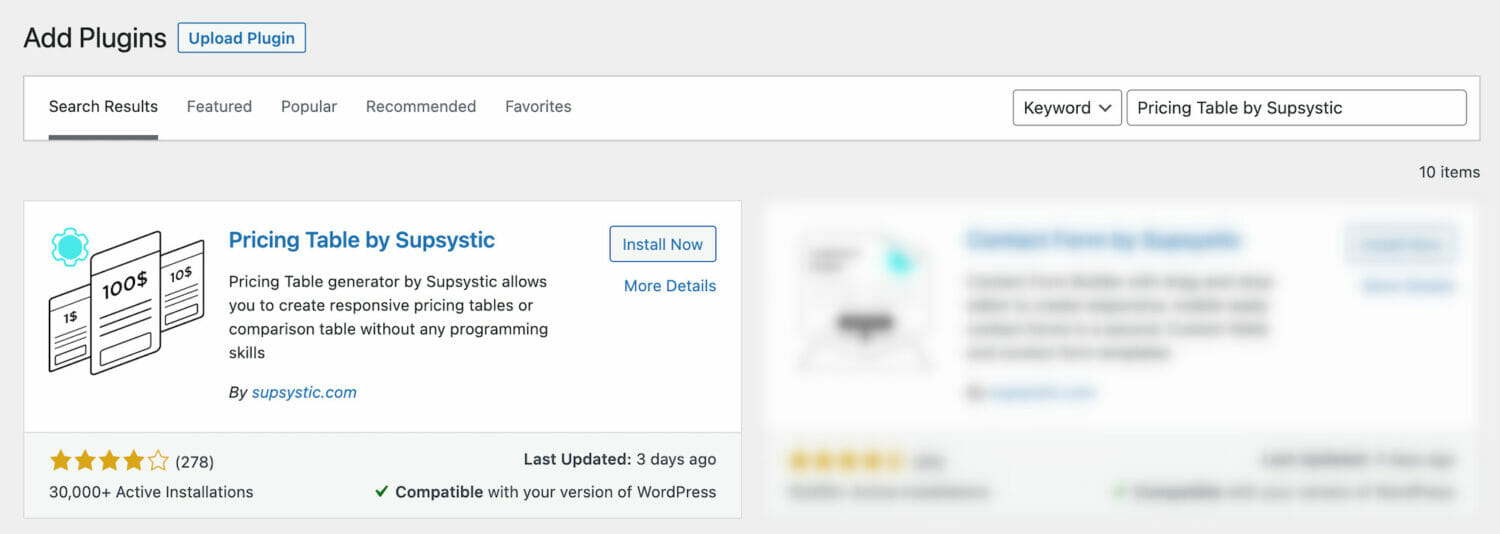
To create a pricing table in WordPress, log in to your website dashboard. Click on the Add New option under Plugins, then click on the Add New button at the top, and type in “Pricing Table by Supsystic” in the search bar.
When it appears in the search results, click on the Install button beside it and then the Activate button.
Creating Membership or Subscription Plans
You need a membership plugin to create membership or subscription plans. There are plenty of plugins out there, but very few match ProfilePress. It offers many features and is super easy to use.
In a separate article, we have covered how to create membership or subscription plans using ProfilePress.
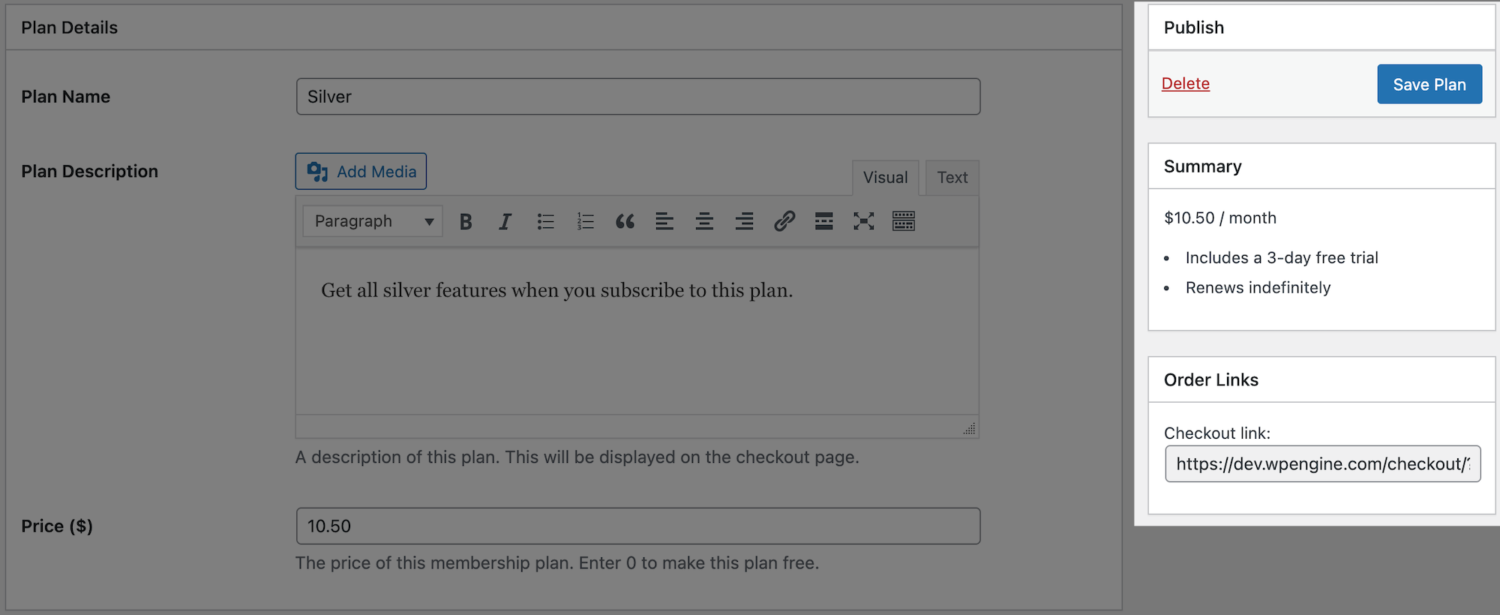
By the end of that tutorial, you would have created two or three plans with separate checkout links for each plan.
Copy those links. You will be inserting them into the pricing table.
Building the Pricing Table in WordPress
We will use the Pricing Table by Supsystic to create a simple pricing table on our demo site.
Install and activate the plugin on your WordPress site.
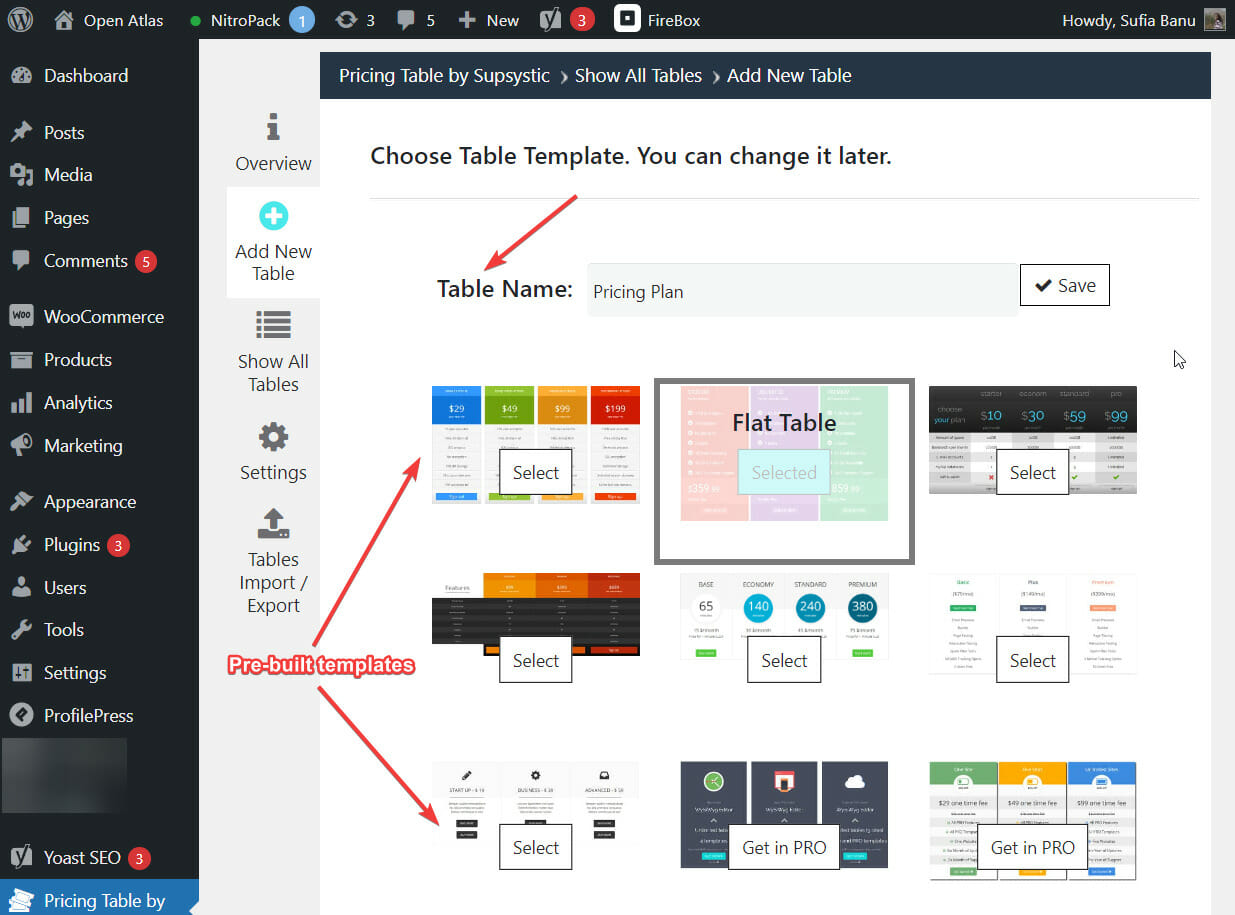
Then go to Pricing Table by Supsystic and select Add New Table.
You will need to select a pre-built pricing page template on the next page and then name the table.
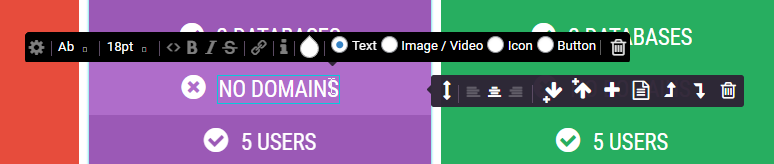
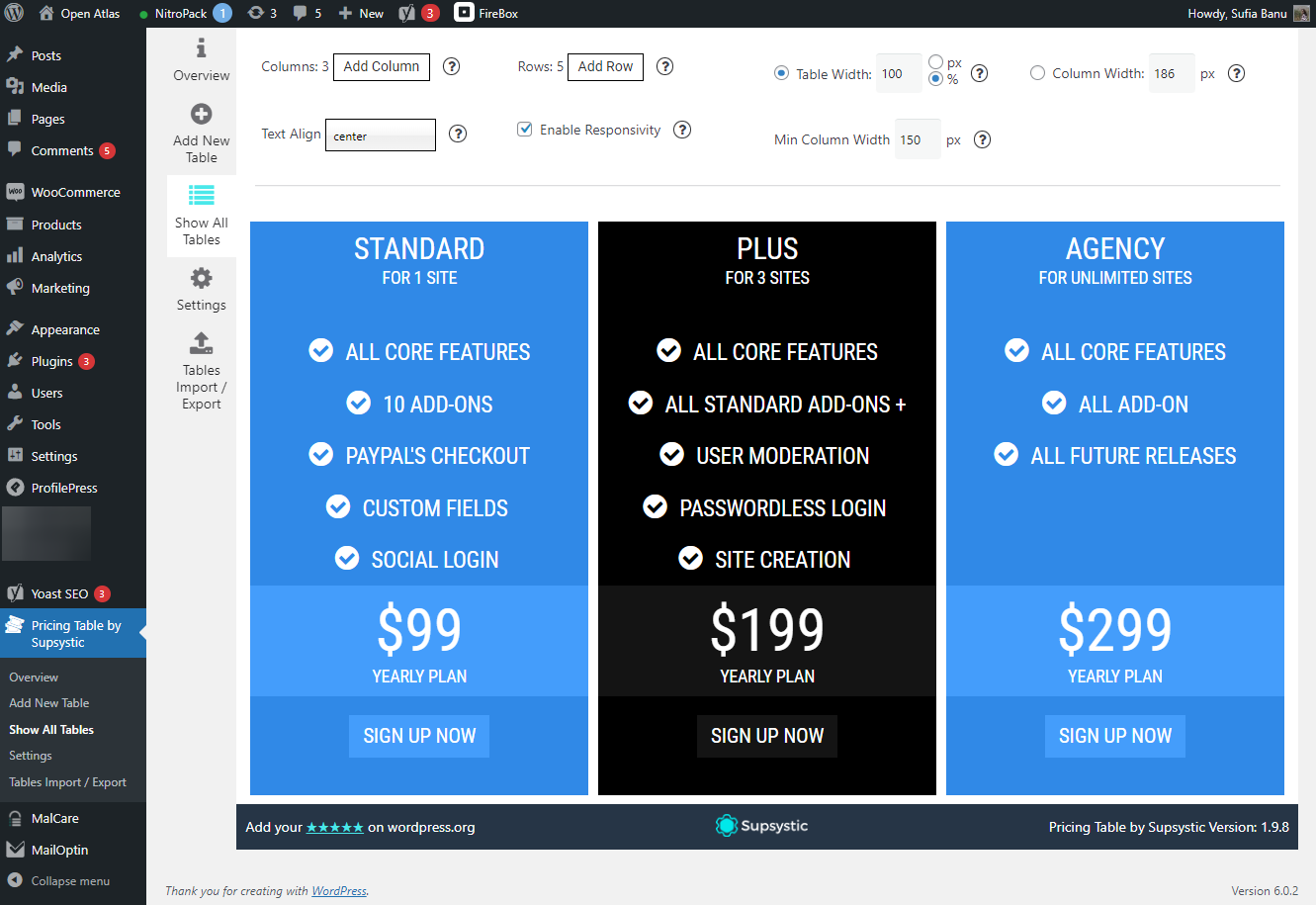
Now, it’s time to modify the template according to your needs. You can change the text color and icons, add images, buttons, and links, and add or delete cells, among other things.
All you need to do is place your cursor where you want to make the modifications, and the plugin will show you options for making the changes.
This is how the template looked at the beginning:
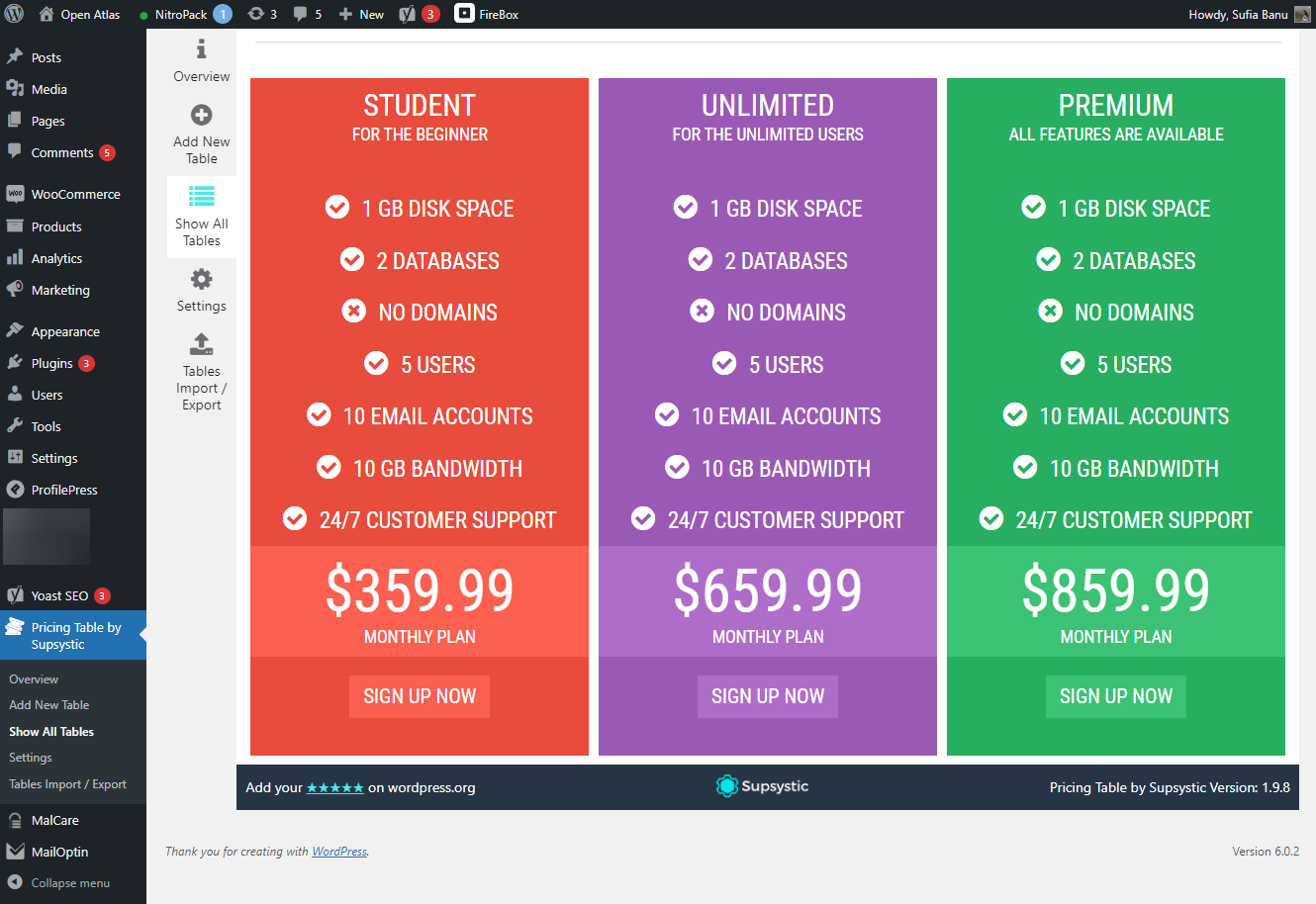
This is the final version of the pricing table after modification:
Adding Membership or Subscription Plans to the Pricing Table
Now that the pricing table is ready, it’s time to add the membership or subscription plans you created in the first step.
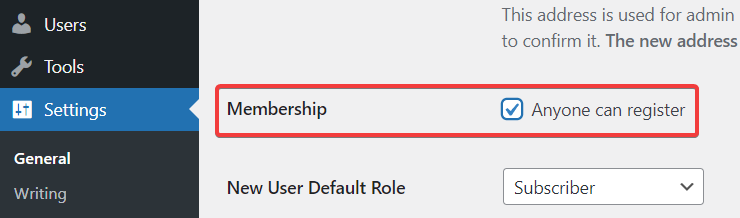
The first thing you would have to do is enable user registration by going to Settings > General. Then, click on the Membership option so that anyone can register on your site.
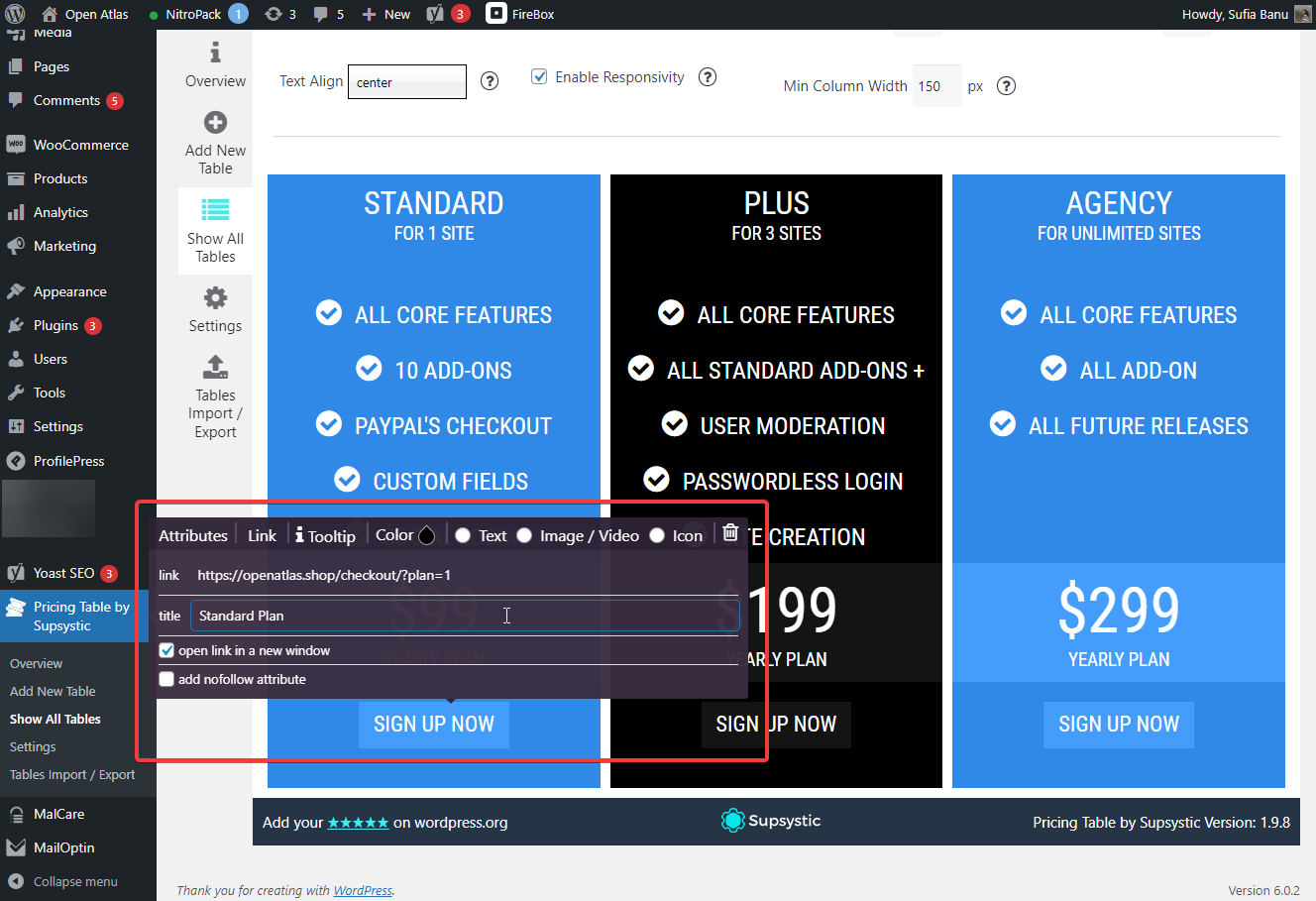
Next, open the pricing table, edit the sign-up button, insert the checkout URLs, and save your changes.
Create a Pricing Page
On the top of the table editor, you will find a shortcode. Copy that.
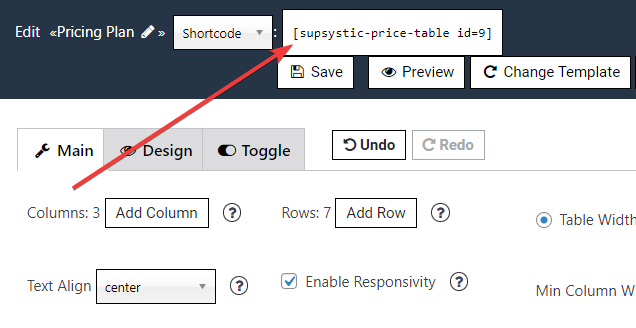
Now go to Pages > Add New. Name the page, paste the shortcode into the page, and hit the Publish button.
You now have a pricing page and a membership or subscription plan on your site.
This is how the pricing page looks on our site.
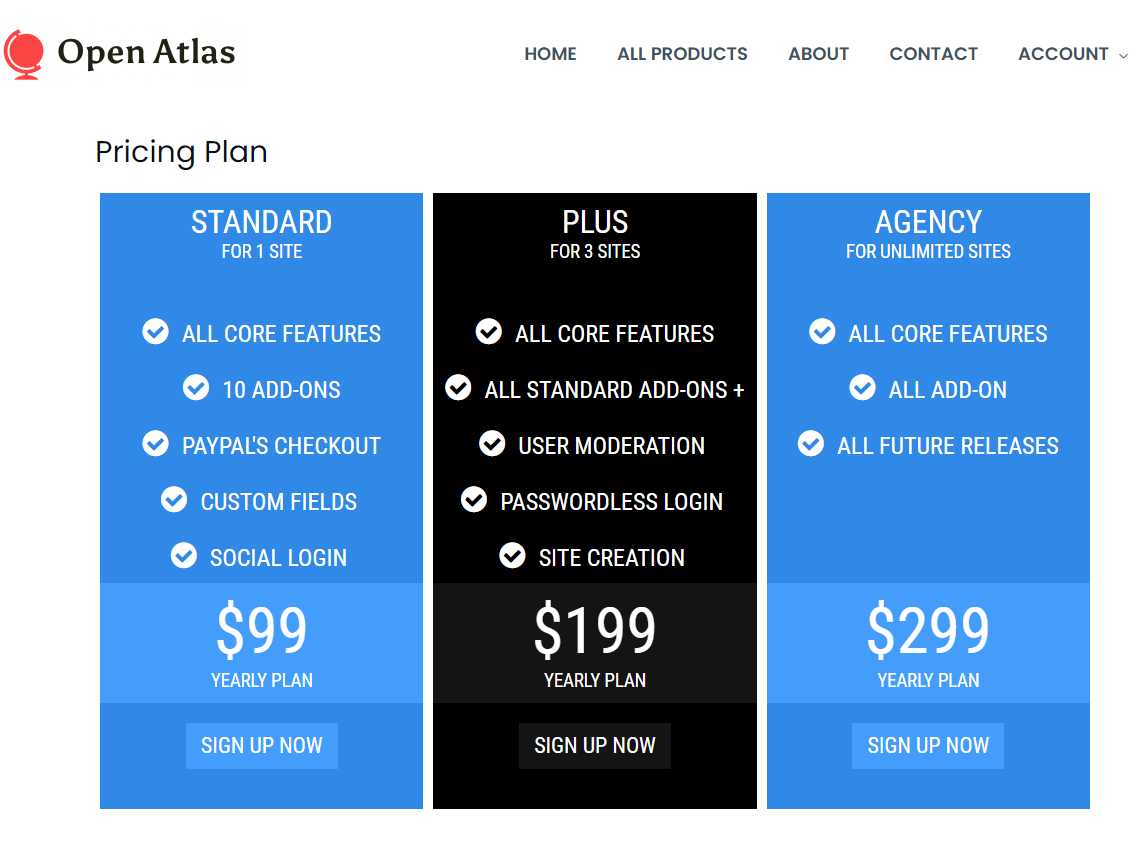
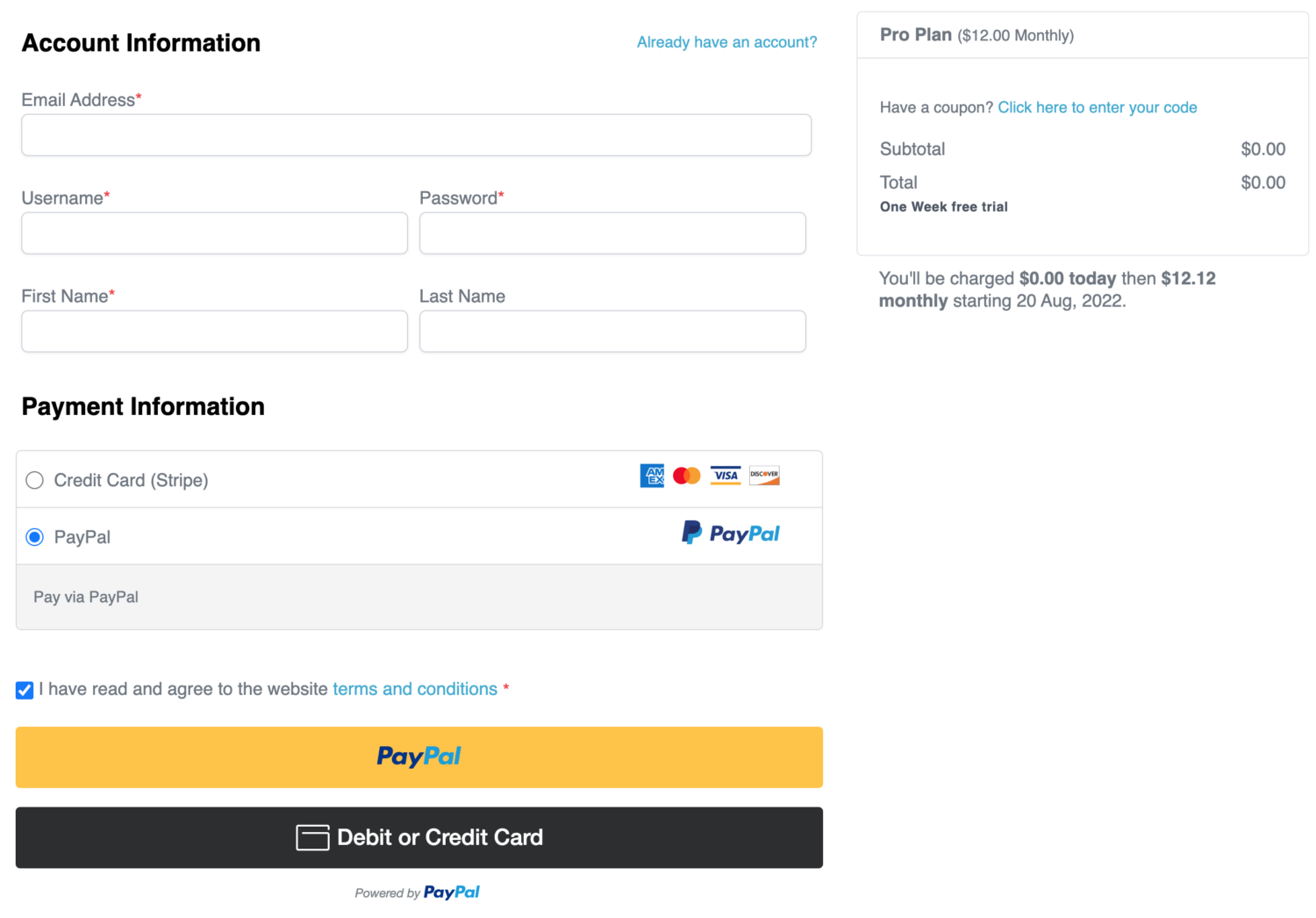
When visitors click the Sign Up Now buttons, they are taken to the respective plan’s checkout pages.
Method 3: Use the Tableberg Plugin
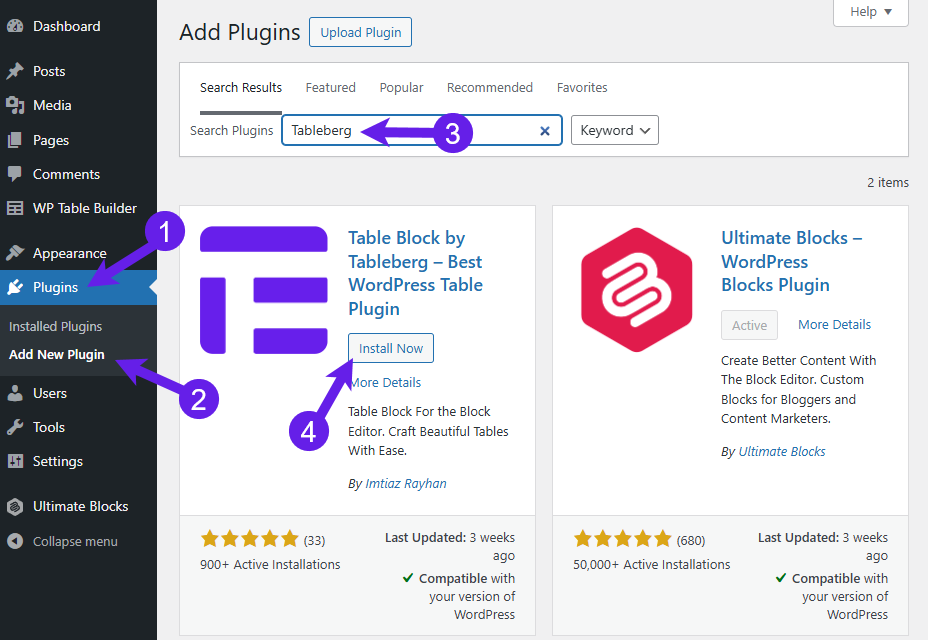
To install the Tableberg, go to Plugins (1) > Add New Plugin (2). Type Tableberg in the search box (3). Please install (4) and activate the plugin after it appears below.
Insert the Tableberg Block
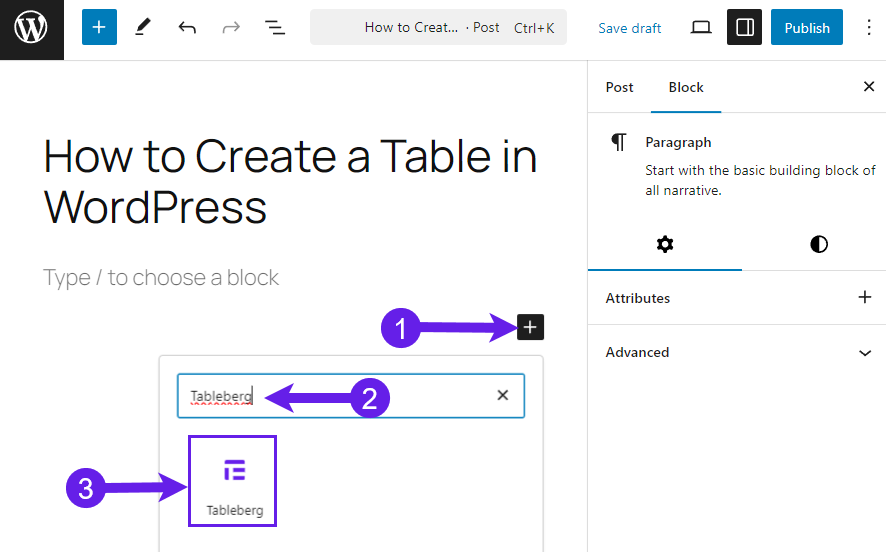
Go to your post or page where you want to create a pricing table. Click the Plus icon “+” (Add Block) (1), type “Tableberg” in the search box (2), and click on the block after finding it (3).
Create Your Pricing Table
Creating a pricing table can be hectic. So, it is wise to choose one from the table template library.
You can see numerous pricing table types there. All you need to do is select one and edit it to match your brand. To select a template, select the option “Pre-Built Table” in the window.
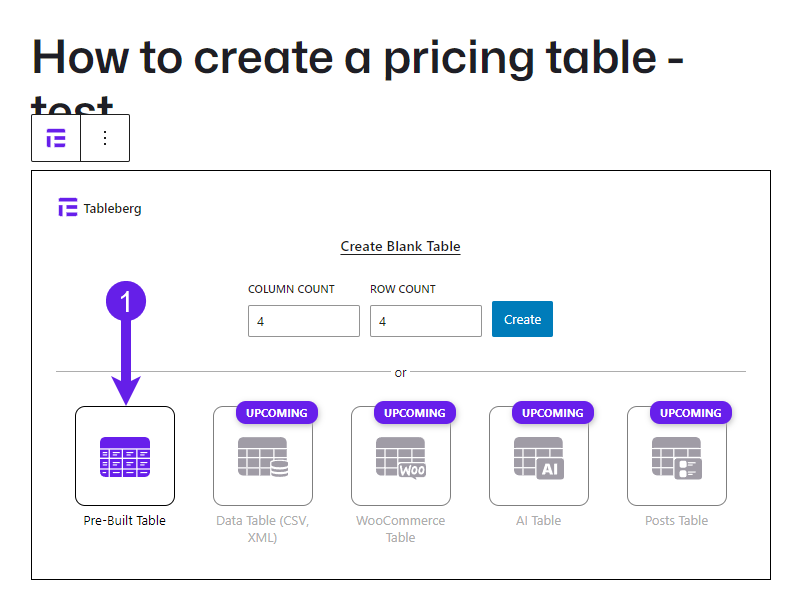
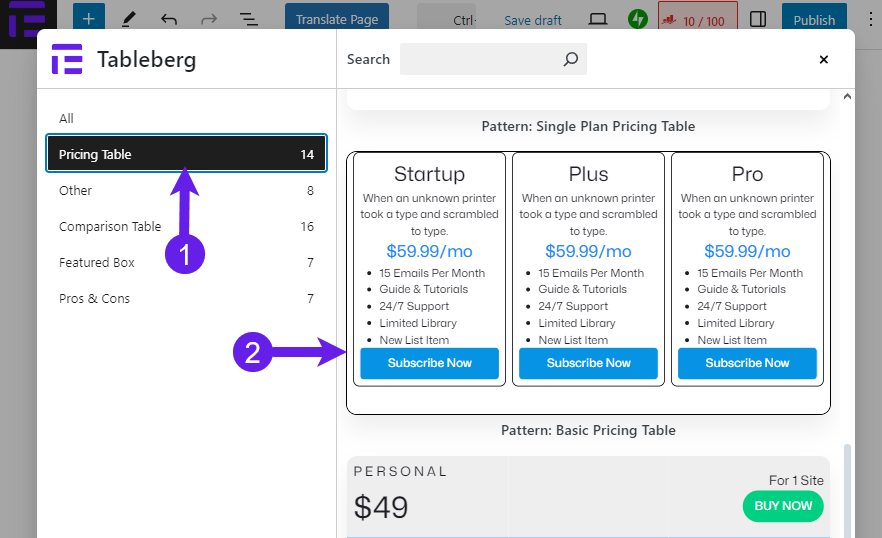
Now, select one from the template library. Select the Pricing Table (1) and select one from there by clicking on it (2).
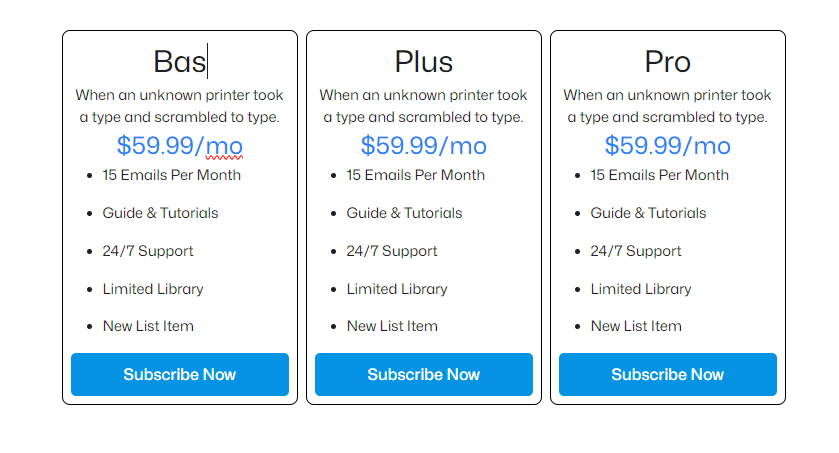
When the table is inserted, edit the table you like. You can edit all the elements of the table. Just put the cursor on it and edit.
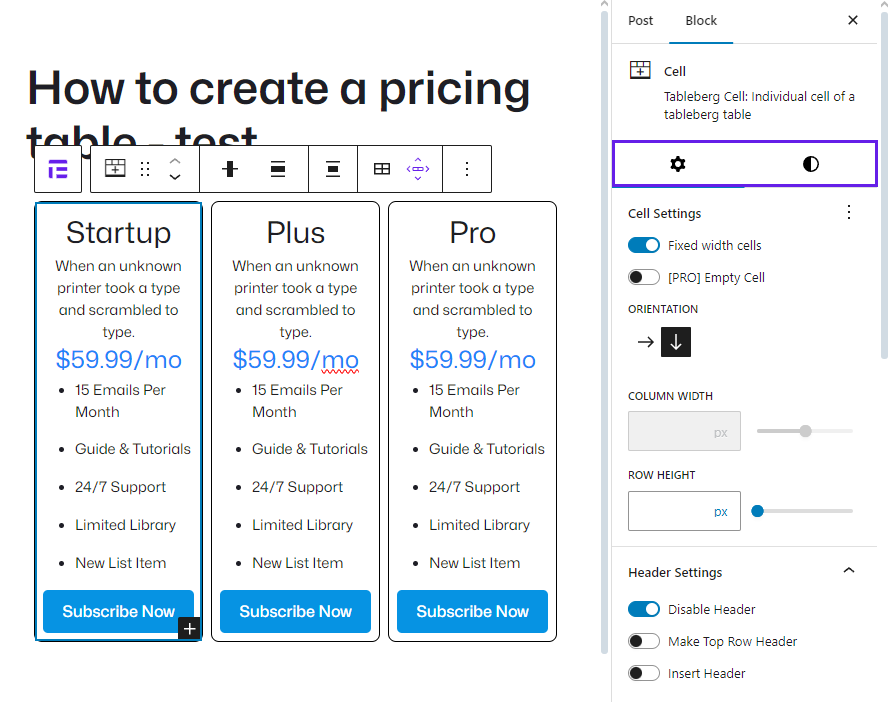
Customize the table from the Block Setting and Style tab.
Preview your Table before publishing it.
So, that’s how you create a pricing table easily within a minute using Tableberg.
Conclusion
Creating a pricing table is an essential step in setting up an online business. If you sell with ProfilePress, the built-in [profilepress-plans] shortcode is the quickest option: there’s nothing extra to install, and it always shows your current prices. If you want full control over the design, Pricing Table by Supsystic and Tableberg let you build an attractive pricing table without any coding.
By following the steps in this article, you can create membership or subscription plans, build a pricing table in WordPress, and publish a pricing page. Remember to prioritize transparency and user experience while designing your pricing table in WordPress.
We hope this tutorial helped you learn how to add beautiful pricing tables in WordPress with no coding required. You may also want to learn how to create a WordPress membership site or see our list of WordPress pricing table plugins.